Published
Civil Rights
Civil Rights Means Law, Enforcement, and the People Who Force Both
American civil-rights history joins constitutional promises, mass organizing, federal law, local power, and the long fight over enforcement.
The story
#storyCivil rights are enforceable claims to equal citizenship. In the United States, the term covers voting, education, work, housing, public accommodations, speech, due process, and protection from discriminatory government action. A constitutional line is a start. Someone still has to make the registrar, school board, employer, landlord, police department, or court obey it.
Reconstruction wrote the first federal architecture
The Thirteenth Amendment abolished slavery except as punishment for crime. The Fourteenth defined citizenship and promised due process and equal protection. The Fifteenth prohibited racial discrimination in voting. During Reconstruction, Black citizens voted and held office while federal law attacked white terror.
The federal retreat from Reconstruction allowed disfranchisement, segregation, and racial violence to harden. Plessy v. Ferguson approved separate-but-equal doctrine in 1896. Separate facilities were rarely equal, and separation itself enforced caste.
Organizing moved institutions
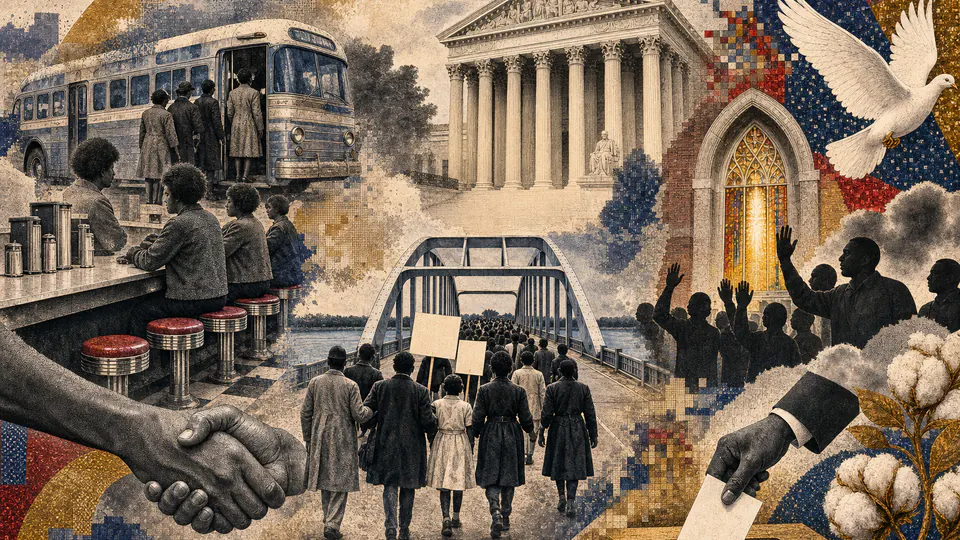
The modern movement joined lawsuits to mass action. Brown v. Board attacked school segregation. The Montgomery boycott attacked buses. Freedom Riders tested interstate rulings. Birmingham and the March on Washington pressed federal law. Selma exposed voter suppression and police violence.
Congress passed the Civil Rights Act in 1964, the Voting Rights Act in 1965, and the Fair Housing Act in 1968. Each law supplied new tools. None could distribute equality by signature alone.
The category kept moving
Black freedom organizing supplied strategies and legal frameworks used by women’s, disability, Latino, Indigenous, immigrant, and LGBTQ movements. Those campaigns also exposed limits in a civil-rights model focused only on individual discrimination rather than wealth, public provision, or institutional power.
The record keeps returning to the same distance. The right may already exist on paper. The movement begins where paper meets the office that says no.
Enforcement therefore belongs inside the history, not after it. A court order needs a plaintiff, lawyers, records, and an official willing or compelled to carry it out. A voting statute needs examiners, registration access, and remedies when local rules change. A workplace rule needs complaints and consequences. Civil-rights campaigns made private routines legible as public systems, then fought over which level of government had the duty and power to stop them. Their victories endure when people can use the institution, not merely cite the law that opened its door.
Reconstruction showed the reach and fragility of federal power
After the Civil War, constitutional amendments ended slavery, established national citizenship, and prohibited racial discrimination in voting. Federal law and troops supported Black voting, officeholding, public education, and institution building across the former Confederacy.
White supremacist organizations used murder, intimidation, and economic retaliation to reverse those gains. Congress passed enforcement laws, but national commitment weakened. Courts narrowed federal protections, and the political settlement of 1877 marked a broader retreat.
The pattern established a recurring problem. A national guarantee can reach a hostile state, but only while institutions have authority, resources, and political will.
Jim Crow joined statute to daily private power
Segregation operated through state law, local ordinance, business practice, employment, housing, schools, transportation, and violence. Poll taxes, literacy tests, white primaries, registration discretion, and terror stripped Black citizens of voting power.
The system was public and private at once. A railroad enforced separate cars under law; an employer threatened a worker who registered; a bank withheld credit; a mob punished the family that challenged any part. Challenging one rule could trigger retaliation through another institution.
Black communities built newspapers, legal defense, women’s clubs, churches, unions, mutual aid, and national organizations. The long record matters because the 1950s movement did not appear when television cameras arrived.
Litigation changed doctrine through planned cases
NAACP lawyers built a campaign against segregated education over decades. They gathered facts, selected jurisdictions, represented plaintiffs, and challenged unequal graduate and professional schools before Brown v. Board of Education in 1954.
Brown rejected state-mandated school segregation, but local resistance produced delay. Families and students faced harassment; boards closed schools or redrew boundaries; federal courts and officials had to return repeatedly.
Litigation can state a right and create an order. It also depends on people willing to become plaintiffs and organizers who protect them outside the courtroom.
Mass action changed the cost of official delay
The Montgomery bus boycott sustained alternative transportation for more than a year. Sit-ins attacked discrimination through consumer pressure. Freedom Riders turned interstate noncompliance into a federal crisis. Birmingham campaigns used boycotts and mass participation against a city prepared to jail children.
These campaigns chose targets whose operations could be interrupted and whose refusal could be made visible. Nonviolence required training, logistics, bail, food, legal work, communications, and institutions able to continue after arrests.
Media images mattered because organizers had created a confrontation revealing how ordinary government worked. Cameras did not produce the movement; the movement forced the country to look at an arrangement officials preferred to call local.
Federal statutes changed the available tools
The Civil Rights Act of 1964 prohibited major discrimination in public accommodations and employment, strengthened federal authority, and attacked segregation in programs receiving federal funds. The Voting Rights Act of 1965 created supervision and remedies for entrenched suppression. The Fair Housing Act of 1968 addressed housing transactions.
Each law had limits in coverage, proof, remedy, and implementation. Employers could disguise exclusion; housing discrimination moved through steering and credit; voting rules changed after one barrier fell. Agencies needed data, investigators, complaints, and sanctions.
Federal protection also became a target of political and judicial attack. Rights won through statute survive through enforcement and public defense, not through the prestige of their signing ceremonies.
Economic power exceeded the discrimination model
Equal access to a low-wage job does not guarantee a living income. A desegregated school can remain unequal through housing boundaries and tax resources. The right to enter a restaurant does not answer whether a family can afford the meal.
Organizers including Martin Luther King Jr. connected civil rights to labor, housing, income, and war. The March on Washington was for jobs and freedom, and the Poor People’s Campaign sought federal action against poverty.
Civil-rights law is strongest at identifying forbidden unequal treatment. Redistribution, public provision, and worker power address structures that can reproduce unequal outcomes without an openly discriminatory instruction.
Later movements extended and revised the framework
Women’s-rights advocates used equal-protection and employment law while criticizing rules built around male experience. Disabled organizers demanded access and independent living rather than institutional custody. LGBTQ advocates attacked criminalization and employment exclusion. Latino, Indigenous, immigrant, and language-rights campaigns developed claims from their own histories.
These movements learned from Black freedom struggle without becoming copies of it. Each exposed a different way institutions define the normal citizen and place others outside public life.
Civil rights are enforceable claims measured by whether a person can vote, work, learn, travel, live, speak, and seek protection on equal terms, and whether government acts before organized exclusion makes that promise expensive enough to abandon.
What people get wrong
#wrong- The myth
The Civil Rights Act and Voting Rights Act permanently secured equal voting rights once they passed. - The record
On June 25, 2013, the Supreme Court's ruling in Shelby County v. Holder struck down the coverage formula that determined which jurisdictions needed federal preclearance before changing voting rules under Section 5 of the 1965 Voting Rights Act, leaving that section inoperable until Congress writes a new formula, something it has not done.
- The myth
Civil rights law only covers race. - The record
The Americans with Disabilities Act, signed July 26, 1990, extended civil-rights-style protections against discrimination to disabled Americans in employment, public accommodations, and transportation, following the same enforcement model Congress built for race in 1964.
- The myth
The Fourteenth Amendment guaranteed enforced equal citizenship starting in 1868. - The record
Federal troops and law briefly backed Black voting and officeholding after 1868, but the Compromise of 1877 withdrew federal enforcement, and Plessy v. Ferguson let states legally segregate in 1896. Full federal enforcement of Black voting rights did not return until the Voting Rights Act of 1965, nearly a century later.
The dates that matter
#dates- 1865-1870 The Thirteenth, Fourteenth, and Fifteenth Amendments remake freedom, citizenship, and voting law.
- 1896 Plessy v. Ferguson approves state segregation under separate but equal.
- 1954 Brown v. Board rejects segregated public schools.
- 1964 The Civil Rights Act bars major forms of discrimination.
- 1965 The Voting Rights Act creates federal tools against voter suppression.
- 1968 The Fair Housing Act bars major forms of housing discrimination.
Questions people ask
#faqsWhat are civil rights?
Civil rights are legal protections for equal citizenship and participation, including voting, education, work, housing, public accommodations, and treatment by government.
When was the civil-rights movement?
The phrase often names the 1950s and 1960s Black freedom movement, but civil-rights organizing reaches from abolition and Reconstruction through later disability, women's, immigrant, and LGBTQ campaigns.
Did the Civil Rights Act end segregation?
It outlawed major forms of discrimination and gave the federal government stronger tools. Enforcement, litigation, local resistance, and unequal outcomes continued.
How should Civil Rights be evaluated?
Separate the immediate result from the institutions, tactics, exclusions, and enforcement record that followed it.
The bookshelf
#bookshelfWhere to go next. Buy from an independent bookstore, or find it at your library for nothing.
-
Why We Can't Wait Martin Luther King Jr., 1964 primary
King's own account of the Birmingham campaign and the case for nonviolent direct action, written the year the Civil Rights Act passed.
-
Parting the Waters: America in the King Years 1954-63 Taylor Branch, 1988 secondary
The organizing behind the public moments, told at the scale the decade actually took.
-
Stony the Road: Reconstruction, White Supremacy, and the Rise of Jim Crow Henry Louis Gates Jr., 2019 secondary
How the promise of 1868 was dismantled, county by county, before the movement had to win it back.
-
Eyes on the Prize: America's Civil Rights Years, 1954-1965 Juan Williams, 1987 secondary
The companion history to the documentary series, still the clearest single-volume narrative.
Wear it: Civil Rights
#merchEvery design here links back to this page.
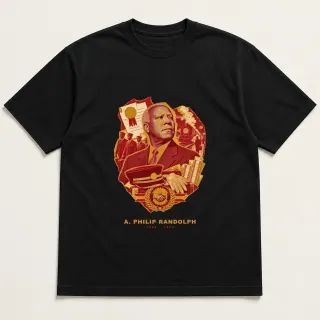 Design proof
 A. Philip Randolph Collage Tee
$36.00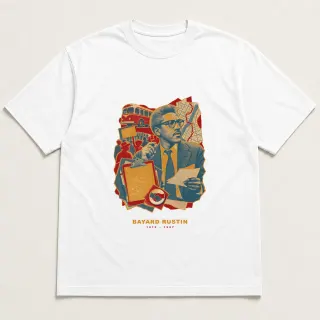 Design proof
 Bayard Rustin Collage Tee
$36.00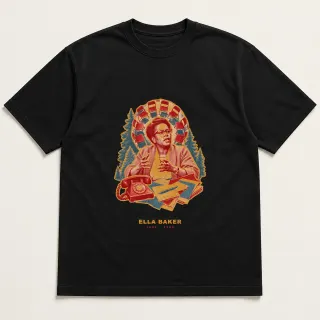 Design proof
 Ella Baker Collage Tee
$36.00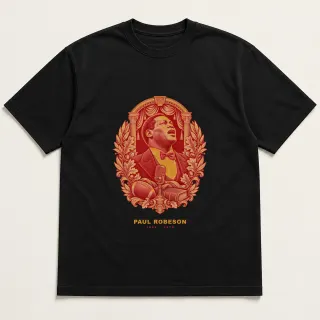 Design proof
 Paul Robeson Engraved Tee
$36.00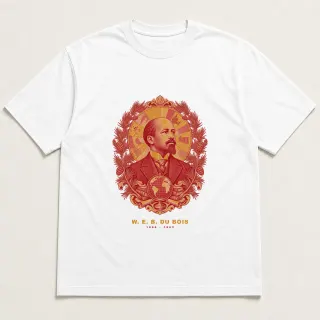 Design proof
 W. E. B. Du Bois Engraved Tee
$36.00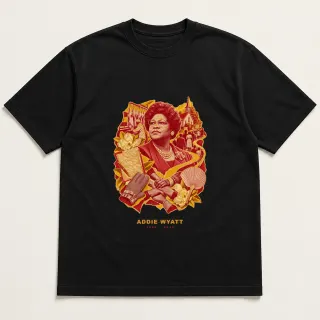 Design proof
 Addie Wyatt Collage Tee
$36.00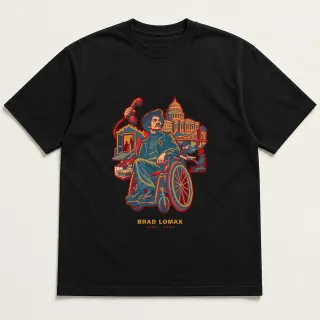 Design proof
 Brad Lomax Pixel Tee
$36.00 Design proof
 Claudia Jones Collage Tee
$36.00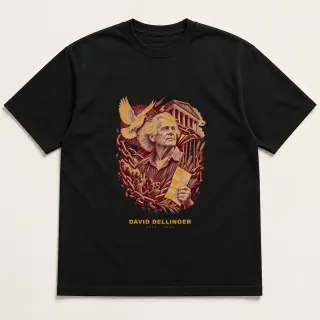 Design proof
 David Dellinger Engraved Tee
$36.00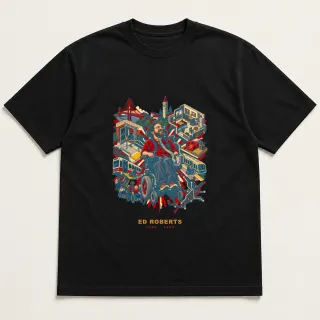 Design proof
 Ed Roberts Pixel Tee
$36.00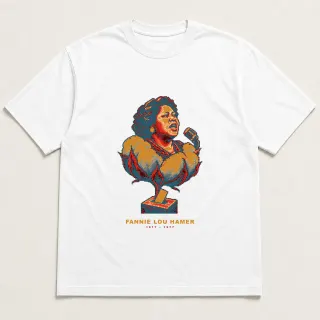 Design proof
 Fannie Lou Hamer Pixel Tee
$36.00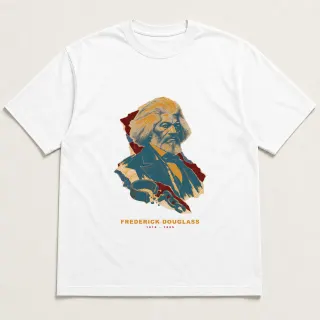 Design proof
 Frederick Douglass Collage Tee
$36.00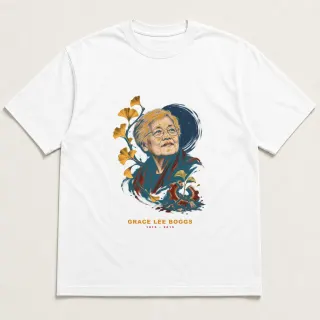 Design proof
 Grace Lee Boggs Engraved Tee
$36.00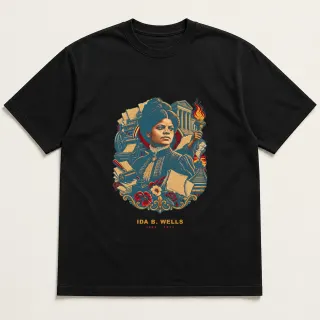 Design proof
 Ida B. Wells Pixel Tee
$36.00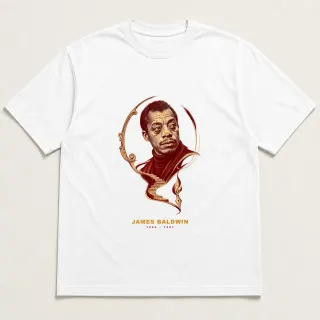 Design proof
 James Baldwin Engraved Tee
$36.00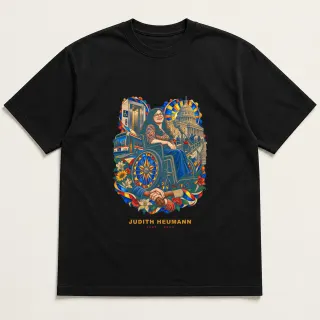 Design proof
 Judith Heumann Engraved Tee
$36.00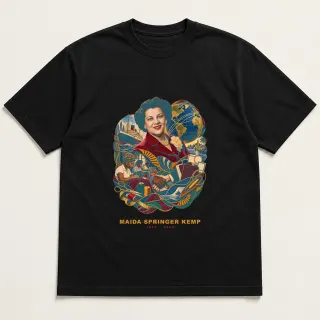 Design proof
 Maida Springer Kemp Collage Tee
$36.00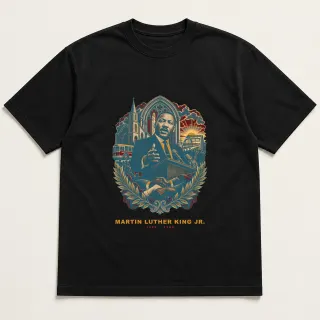 Design proof
 Martin Luther King Jr. Engraved Tee
$36.00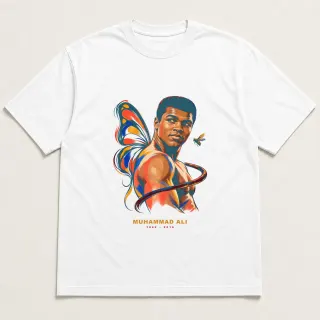 Design proof
 Muhammad Ali Engraved Tee
$36.00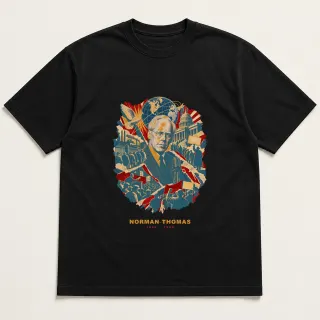 Design proof
 Norman Thomas Collage Tee
$36.00 Design proof
 Pauli Murray Pixel Tee
$36.00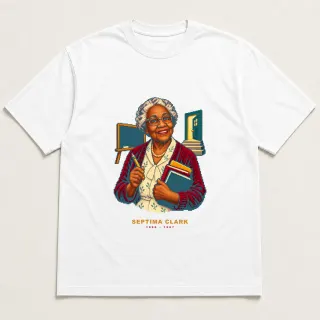 Design proof
 Septima Clark Pixel Tee
$36.00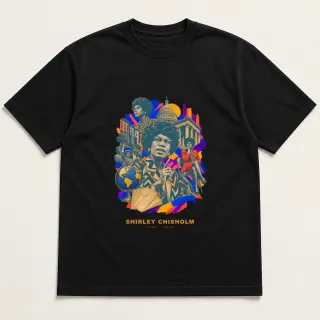 Design proof
 Shirley Chisholm Engraved Tee
$36.00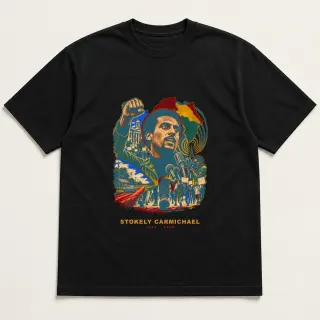 Design proof
 Stokely Carmichael Pixel Tee
$36.00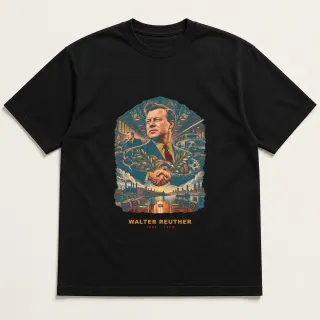 Design proof
 Walter Reuther Engraved Tee
$36.00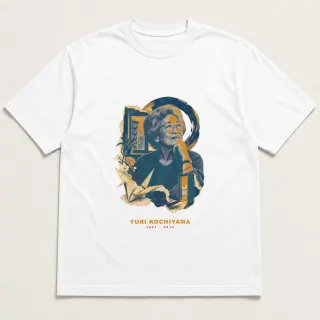 Design proof
 Yuri Kochiyama Collage Tee
$36.00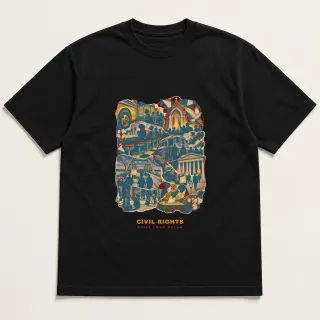 Design proof
 Civil Rights Collage Tee
$36.00Sources
#sourcesPrimary sources
The documents themselves: laws, court opinions, speeches, letters, and the numbers from the agencies that count them.
- National Archives, Constitution Amendments 11-27
- U.S. Department of Justice, Civil Rights Division
- U.S. Department of Justice, Civil Rights Division, "The Shelby County Decision"
- Shelby County v. Holder, 570 U.S. 529 (2013), opinion text
- National Archives, "Anniversary of the Americans with Disabilities Act"
Secondary sources
Written afterward, about the story.