Published
Shirley Chisholm
Shirley Chisholm Was Unbought, Unbossed, and Running in 1972
Born November 30, 1924. Died January 1, 2005
Shirley Chisholm became the first Black woman in Congress and the first Black candidate to seek a major party presidential nomination.
The story
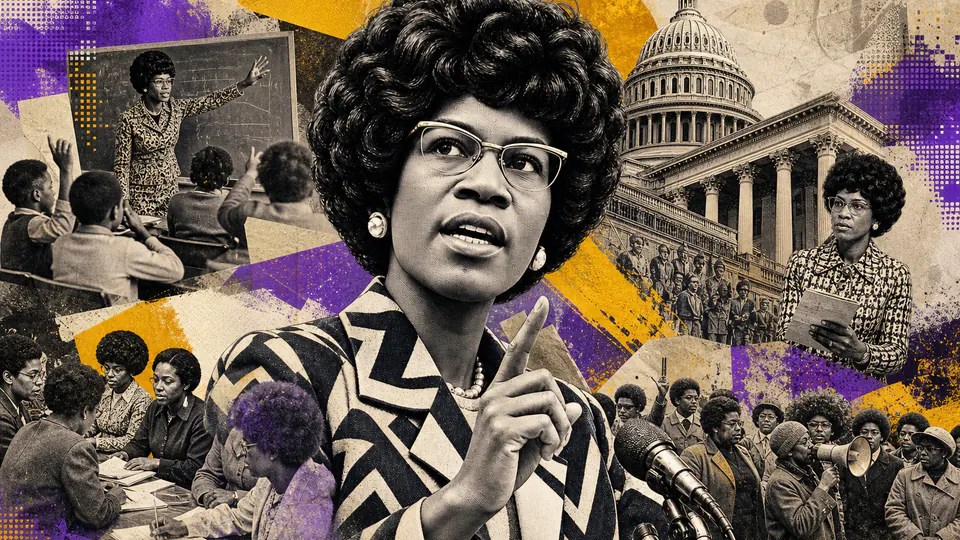
#storyShirley Chisholm arrived in Congress in 1969 and was assigned to the Agriculture Committee. Her Brooklyn district had little farm policy and plenty of hunger. She objected, endured a lecture about accepting assignments, and won a move to Veterans’ Affairs, where her district’s needs were much harder to pretend away.
The fight introduced the method behind her slogan: unbought and unbossed.
An educator entered machine politics
Chisholm was born in Brooklyn in 1924 and spent part of her childhood in Barbados. She studied sociology at Brooklyn College, earned a master’s degree at Columbia, and worked in early-childhood education. In Bedford-Stuyvesant politics she built support through clubs and community organizations, then won a State Assembly seat in 1964.
Four years later she became the first Black woman elected to Congress. She backed federal child care, school meals, a guaranteed income, labor rights, and cuts to military spending. She helped found the Congressional Black Caucus and the National Women’s Political Caucus.
The 1972 campaign
Chisholm announced her presidential bid on January 25, 1972. She was the first Black person to seek a major party’s presidential nomination and the first woman to seek the Democratic nomination. Her campaign had little money, received limited protection at first, and faced skepticism from leaders who agreed with parts of her program but preferred a candidate they considered viable.
She campaigned anyway and won delegates. After segregationist candidate George Wallace was shot, Chisholm visited him in the hospital. The visit angered supporters, but she defended it as a human act and later gained Wallace’s help for legislation on domestic workers.
Seven terms without the ornamental chair
Chisholm served through 1982, eventually joining the Rules Committee and Democratic leadership. She opposed the Vietnam War and linked civil rights to child care, food, income, and work. After Congress she taught at Mount Holyoke and continued speaking.
She died in 2005 and received the Presidential Medal of Freedom posthumously in 2015. Firsts can become museum labels. Chisholm used hers as a tool, then kept arguing about the committee assignment.
Barbados and Brooklyn shaped her political education
Chisholm was born in Brooklyn in 1924 to Caribbean immigrant parents. She spent part of childhood with her maternal grandmother in Barbados, then returned to New York. She later credited the schooling and discipline she received there while also locating her public life in Brooklyn’s working communities.
At Brooklyn College she joined debate and campus politics. After graduate study at Columbia, she worked in early-childhood education and directed child-care centers. That experience gave her policy knowledge often dismissed as women’s work: whether a parent can take a job or attend school depends on who cares for a child, at what cost, and under whose standards.
She entered Democratic club politics in Bedford-Stuyvesant, where local organizations could mobilize votes while restricting women to support roles. Chisholm learned the machinery, challenged its gatekeepers, and built a base among neighborhood groups and women voters.
The state legislature made services into political power
Elected to the New York State Assembly in 1964, Chisholm worked on unemployment benefits, education, and domestic workers’ rights. Her policy agenda treated care work and household survival as public concerns rather than favors granted after major economic questions were settled.
Redistricting then created a new congressional seat centered in Brooklyn. Chisholm won in 1968, becoming the first Black woman elected to Congress. The first carried symbolic force; the district supplied the votes and demands that gave it substance.
Her campaign crossed gender expectations within Black politics and racial barriers within the women’s movement. She could not assume either constituency would treat her leadership as the natural next step.
A committee assignment revealed the House’s priorities
House leaders initially assigned Chisholm to the Agriculture Committee. Agricultural policy affects food and poverty, but the assignment offered little direct influence over the urban issues on which she had campaigned. She protested rather than accept the placement as a lesson in freshman obedience.
She moved to the Veterans’ Affairs Committee and later Education and Labor, where her background fit legislation on schools, work, and social programs. Eventually she served on the Rules Committee and in party leadership.
The dispute showed how legislatures distribute authority through procedure. Winning office gives a member a vote; committee placement determines which bills the member can shape before most colleagues see them. Chisholm made the internal allocation of power a public constituent issue.
The presidential campaign contested who could be serious
In 1972, Chisholm sought the Democratic presidential nomination, the first Black person to run in a major party’s presidential primaries and the first woman to seek its nomination. Her campaign had limited money, uneven institutional backing, and security threats.
She ran against the assumption that Black political leadership should be male and the women’s movement should rally around a white candidate. Some potential allies argued her campaign could not win and therefore did not merit support. That reasoning protects an old field by defining seriousness through access the excluded candidate has not yet been allowed to build.
Chisholm won delegates and used the campaign to place child care, income, war, racial justice, and political representation in the same national frame. She did not come close to the nomination. The campaign’s importance lies in the organization and precedent created while the loss remained real.
Visiting George Wallace tested principle against performance
After Alabama governor and segregationist presidential candidate George Wallace was shot during the 1972 campaign, Chisholm visited him in the hospital. Some supporters were furious. She defended the act as recognition of his humanity, not agreement with his politics.
The visit is often told as a scene of personal grace. Its political meaning is harder. Wallace had used state power and racist demagoguery against Black citizens. A humane visit did not repair that record. Chisholm demonstrated that refusing another person’s dehumanization need not require forgetting the people harmed by his program.
Wallace later supported a federal domestic-worker measure associated with Chisholm. The episode shows legislative relationships crossing moral conflict, but it should not be polished into a tale in which kindness automatically redeems power.
Material policy kept the first from becoming the whole story
Chisholm opposed the Vietnam War and argued that military spending displaced money from schools, housing, health, and anti-poverty work. She supported food assistance, minimum-income proposals, child care, and employment rights. She helped found the Congressional Black Caucus and National Women’s Political Caucus while sometimes clashing with both Black and feminist leaders.
After leaving Congress in 1983, she taught and continued public work. She died in 2005. Her phrase “unbought and unbossed” has survived because it sounds like personal courage. Her record supplies the harder meaning. Independence required a district base, policy knowledge, repeated campaigns, and a willingness to fight over the room where a bill was written, not only the podium where it was announced.
In their own words
#wordsWhat Shirley Chisholm actually said, where, and when. Each one links to the page it was checked against.
-
As a black person, I am no stranger to race prejudice. But the truth is that in the political world I have been far oftener discriminated against because I am a woman than because I am black.
On the floor of the House of Representatives, May 21, 1969, introducing the Equal Rights Amendment. Shirley Chisholm, "Equal Rights for Women," Congressional Record (May 21, 1969) -
More than half of the population of the United States is female. But women occupy only 2 percent of the managerial positions.
The same May 21, 1969 House floor speech, on employment discrimination against women. Shirley Chisholm, "Equal Rights for Women," Congressional Record (May 21, 1969) -
Women need no protection that men do not need. What we need are laws to protect working people, to guarantee them fair pay, safe working conditions...
The same May 21, 1969 speech, answering the argument that protective labor laws justified treating women differently under the law. Shirley Chisholm, "Equal Rights for Women," Congressional Record (May 21, 1969) -
there are a lot more veterans in my district than trees
As a freshman representative in 1969, explaining to House leadership why she wanted off the Agriculture Committee and onto Veterans' Affairs. National Archives, "Congresswoman Shirley Chisholm: Unbought and Unbossed" -
I am not the candidate of black America, although I am black and proud. I am not the candidate of the women's movement of this country, although I am a woman and equally proud of that. I am not the candidate of any political bosses or fat cats or special interests. I am the candidate of the people of America…
Announcing her presidential campaign at the Concord Baptist Church of Christ in Brooklyn, January 25, 1972. NYC Department of Records and Information Services, "Saluting Shirley Chisholm"
What people get wrong
#wrong- The myth
Chisholm's 1972 campaign was a symbolic protest run, not a real bid for the nomination. - The record
She qualified for primary ballots, appeared in televised debates, and won delegates at the Democratic convention that July, finishing with about 152 delegate votes on the first ballot even after limited Secret Service protection and a campaign budget dwarfed by her rivals'.
- The myth
Chisholm was assigned to a committee that fit her Brooklyn district and background. - The record
House leadership's first assignment for her was the Agriculture Committee. She protested publicly and won reassignment to Veterans' Affairs, later moving to Education and Labor and then Rules.
- The myth
"Unbought and unbossed" was just a campaign slogan. - The record
It was also the title of her 1970 political memoir, published two years before her presidential run, laying out the record of independence from Brooklyn's Democratic clubs that the slogan later compressed into three words.
The dates that matter
#dates- November 30, 1924 Born in Brooklyn, New York.
- 1946 Graduates from Brooklyn College.
- 1964 Wins election to the New York State Assembly.
- November 1968 Becomes the first Black woman elected to Congress.
- January 25, 1972 Announces her presidential campaign.
- 1977 Becomes secretary of the House Democratic Caucus.
- 1982 Declines to seek an eighth House term.
- January 1, 2005 Dies in Ormond Beach, Florida.
Questions people ask
#faqsWho was Shirley Chisholm?
Shirley Chisholm was an educator, New York legislator, and seven-term U.S. representative from Brooklyn.
Was Shirley Chisholm the first Black woman in Congress?
Yes. She won election in 1968 and entered the House on January 3, 1969.
Did Shirley Chisholm run for president?
Yes. She sought the Democratic nomination in 1972 and won delegates despite a small budget and resistance from party leaders.
What does unbought and unbossed mean?
It was Chisholm's campaign slogan and the title of her 1970 autobiography, expressing her claim to political independence from machine control.
The bookshelf
#bookshelfWhere to go next. Buy from an independent bookstore, or find it at your library for nothing.
-
Unbought and Unbossed Shirley Chisholm, 1970 primary
Her own account of Bedford-Stuyvesant politics, the Assembly, and her first House term, reissued in 2022.
-
The Good Fight Shirley Chisholm, 1973 primary
Her own account of the 1972 presidential campaign, written the year after she lost it.
-
Shirley Chisholm: Catalyst for Change, 1926-2005 Barbara Winslow, 2013 secondary
The standard biography, placing her career inside Brooklyn's postwar Black and feminist politics.
Wear it: Shirley Chisholm
#merchEvery design here links back to this page.
Sources
#sourcesPrimary sources
The documents themselves: laws, court opinions, speeches, letters, and the numbers from the agencies that count them.
Secondary sources
Written afterward, about the story.
- U.S. House History, Shirley Anita Chisholm
- U.S. House History, First African-American Woman Elected to Congress
- Library of Congress, Shirley Chisholm Resource Guide
- Wikipedia, Shirley Chisholm
- National Archives, Shirley Chisholm
- Smithsonian, Shirley Chisholm
- Rutgers University, Shirley Chisholm Project
- National Archives, "Congresswoman Shirley Chisholm: Unbought and Unbossed"
- NYC Department of Records and Information Services, "Saluting Shirley Chisholm"