Published
Women's suffrage
The Night of Terror: How Suffrage Was Actually Won
Guards beat and shackled suffragist prisoners at Occoquan Workhouse on November 14, 1917. The picket line, the labor alliance, and the vote won by 1920.
The story
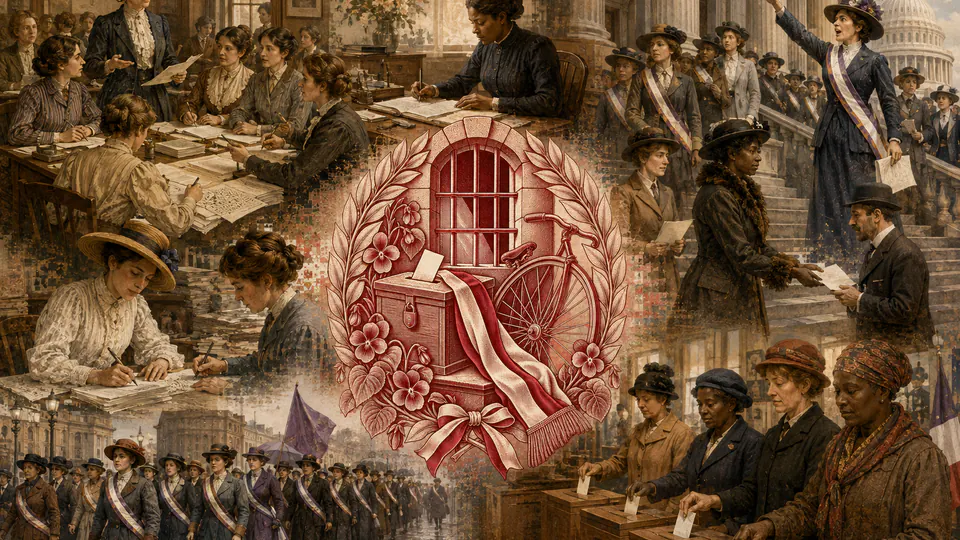
#storyOn the night of November 14, 1917, guards at Virginia’s Occoquan Workhouse dragged more than two dozen women down darkened corridors and threw them into unheated punishment cells. Lucy Burns spent the night with her wrists shackled to the bars above her head. Guards slammed Dora Lewis into an iron bed frame hard enough to knock her out. The women’s crime was standing outside the White House holding banners asking President Wilson how long women had to wait for liberty; the charge on the books was obstructing traffic. Newspapers picked up a name for what happened before dawn: the Night of Terror. It did not win the vote by itself. Winning it took a militant picket line willing to go to prison, a hunger strike running at the same time in a different jail, and a labor movement that had been building the case for suffrage for years before most of the picketers had ever heard of Alice Paul.
The picket line that would not stop
Alice Paul and Lucy Burns led the National Woman’s Party’s first White House picket on January 10, 1917, nicknamed the Silent Sentinels for the wordless discipline of the protest. They stood at the gates six days a week holding banners; one of the earliest read, Mr. President how long must women wait for liberty. For months, police left them alone. Once the United States entered World War I that April, the same banners read as an accusation the government could not shrug off, and the mood on the sidewalk turned. Crowds tore up signs and shoved pickets, and in June 1917 police started arresting the women for obstructing traffic. Sentences that began as a few days in the District Jail grew to months at the Occoquan Workhouse as the year wore on. More than 150 women were eventually convicted of obstructing traffic over the life of the campaign.
The Night of Terror
On November 10, 1917, forty-one picketers were arrested outside the White House, among them Mary Nolan, a 73-year-old suffragist who had come to Washington from Jacksonville, Florida. A judge gave her six days. On November 14, guards transferred more than two dozen of the convicted women, Nolan included, to Occoquan, where they demanded to be treated as political prisoners. Superintendent W.H. Whittaker refused to discuss it and ordered his guards to teach the women a lesson.
What happened next is documented in detail because the prisoners wrote it down afterward. Guards shackled Lucy Burns’s wrists to the top of her cell, forcing her to stand through the night, and threatened her with a straitjacket and a gag. Dorothy Day’s arms were twisted above her head, then guards slammed her down over the arm of an iron bench twice. Dora Lewis’s head hit an iron bed frame and she lost consciousness; her cellmate, Alice Cosu, watched it happen, suffered a heart attack from the shock, and got no doctor until the following morning. Nolan, thrown hard enough to strike a bed herself, later gave her account to the National Woman’s Party, and it ran in Doris Stevens’s 1920 book Jailed for Freedom. Of her own six-day sentence for holding a sign, she wrote:
Never was there a sentence like ours for an offense such as ours, even in England.
Alice Paul, in a different jail
Alice Paul was not at Occoquan for the Night of Terror. She was serving a seven-month sentence in the District Jail in Washington after an October arrest, and on November 5 she stopped eating. Guards began force-feeding her through a rubber tube three times a day starting November 8, and jail doctors moved her to the psychiatric ward, where a physician examined her and found nothing wrong, though officials kept up the threat that she could be committed if she called off the picketing. When prison officials told reporters the process had gone smoothly, Paul answered from her cell on November 9:
It’s a lie. I have resisted to the limit of my strength.
She was moved to the hospital ward on November 18. Rose Winslow, held in the same jail on the same hunger strike, was getting the same tube.
The labor women who organized the other half of it
While Paul and Burns made headlines outside the White House, a separate and older wing of the suffrage campaign had been organizing for years in the garment shops of New York’s Lower East Side. Rose Schneiderman and Leonora O’Reilly, both former garment workers who had come up through the Women’s Trade Union League, founded the Wage Earners’ Suffrage League on March 22, 1911, so working women would run their own suffrage organization instead of following the mostly middle-class leadership of the National American Woman Suffrage Association. Three days later, the Triangle Shirtwaist Fire killed 146 garment workers, most of them young immigrant women. At the memorial meeting that followed, Schneiderman told the crowd at the Metropolitan Opera House:
I know from experience it is up to the working people to save themselves. And the only way is through a strong working-class movement.
The fire became the labor wing’s argument for suffrage. O’Reilly led a 1912 parade delegation carrying banners reading We Want the Vote for Fire Protection, and testified to Congress’s Judiciary Committee that year that the courts had already answered the question of who would protect women without a ballot of their own: New York’s working women remembered the Triangle fire cases, she told the committee. They had seen their “women burned alive,” appealed to the courts, and gotten back the same old verdict, nobody to blame.
Schneiderman made the same case in plainer language that same year, telling a Cleveland audience the worker must have bread, but she must have roses, too, in a speech whose full history, and the 1912 Lawrence strike the line later got attached to, are told at causes/symbols-of-the-left and causes/bread-and-roses. By November 6, 1917, the argument had votes behind it: New York, the country’s largest state, approved full suffrage at the polls, carried in part by immigrant garment workers turning out husbands, brothers, and neighbors, the men who actually held the ballot that year. Helen Keller, organizing those same years from inside the Socialist Party and the IWW, was one more voice from the organized left arguing that working women’s problems were political problems. The picket line outside the White House and the ground campaign on the Lower East Side ran as two different operations aimed at the same amendment.
What finally moved Congress
The legal fallout from the picketing arrived first. The women were released in late November, and by March 1918 the District of Columbia Court of Appeals had ruled the arrests illegal and declared every conviction unconstitutional. Congress had already started moving before that ruling: Wilson had shifted to backing the amendment by the new year, and on January 10, 1918, the House passed it by the bare two-thirds majority a constitutional amendment requires.
The Senate was not there yet. Wilson addressed the Senate directly that September, and on October 1, 1918, the amendment fell one vote short when Senator Wolcott of Delaware cast the deciding no. It took a new Congress to finish the job: the House passed the amendment again on May 21, 1919, and the Senate followed on June 4, 1919, 56 to 25. Ratification reached the required three-fourths of the states on August 18, 1920, when 50 of the 99 members of Tennessee’s House voted yes. Secretary of State Bainbridge Colby certified the amendment early in the morning of August 26, 1920, once Tennessee’s signed certificate reached Washington.
The honest asterisk
The amendment banned voting discrimination “on account of sex” and said nothing about race, an omission the movement’s own record had already previewed. At a national suffrage parade in Washington in March 1913, organizers told Black marchers to walk at the rear so as not to offend Southern white suffragists. Ida B. Wells-Barnett, the anti-lynching journalist who had brought her own Chicago suffrage club to march, refused to accept it, then stepped out of the crowd partway through the parade to take her place with the Illinois delegation anyway, flanked by two white suffragists. The Black-owned Chicago newspaper the Broad Ax reported that she “proudly marched,” showing that “no Color line existed,” true for that one afternoon and for very little of what came after.
Ratification did not reach most Black women in the South. The same poll taxes, literacy tests, grandfather clauses, and threats of violence at the courthouse that had already been blocking Black men kept most Black women off the rolls for another 45 years. Congress did not close that gap until the Voting Rights Act, signed August 6, 1965, banned the literacy test outright and sent federal examiners into the states that had used it, registering roughly a quarter million Black voters by the end of that year alone.
What’s still standing
The Occoquan Workhouse still stands in Lorton, Virginia, converted decades ago into the Workhouse Arts Center. In 2020, on the amendment’s hundredth anniversary, part of the old prison reopened as the Lucy Burns Gallery. A short drive away, at the Turning Point Suffragist Memorial, visitors can see a section of the actual White House fence the Silent Sentinels once stood outside, on loan from the National Park Service. Whittaker’s cells and Wilson’s fence, still standing a few miles apart, are what is left of the two ends of the argument.
What people get wrong
#wrong- The myth
The 19th Amendment gave all American women the right to vote in 1920. - The record
The amendment banned voting discrimination "on account of sex" but said nothing about race. Poll taxes, literacy tests, grandfather clauses, and violence at the courthouse kept most Black women in the South off the rolls for another 45 years, until the Voting Rights Act, signed August 6, 1965, banned the literacy test and sent federal examiners into the states that had used it.
- The myth
The suffrage movement was united across race. - The record
At a national suffrage parade in Washington in March 1913, organizers told Black marchers to walk at the rear so as not to offend Southern white suffragists. Ida B. Wells-Barnett refused, then stepped out of the crowd partway through and took her place with the Illinois delegation anyway.
- The myth
The vote was won through peaceful lobbying alone, without state violence. - The record
On the night of November 14, 1917, guards at Virginia's Occoquan Workhouse beat and shackled a group of suffragist prisoners on the order of Superintendent W.H. Whittaker, an episode the press called the Night of Terror, while Alice Paul was separately force-fed through a rubber tube in the District Jail after a hunger strike.
- The myth
Suffrage was a middle-class cause that working women mostly watched from outside. - The record
Rose Schneiderman and Leonora O'Reilly, both former garment workers, founded the Wage Earners' Suffrage League on March 22, 1911 specifically so working women would run their own suffrage organization instead of following the mostly middle-class leadership of the National American Woman Suffrage Association, and their labor-suffrage argument helped carry New York's 1917 referendum.
The dates that matter
#dates- March 22, 1911 Rose Schneiderman and Leonora O'Reilly found the Wage Earners' Suffrage League in New York.
- March 25, 1911 The Triangle Shirtwaist Fire kills 146 garment workers, most of them young immigrant women.
- 1912 O'Reilly testifies before Congress's Judiciary Committee, tying the Triangle deaths to the case for the vote.
- January 10, 1917 Alice Paul and Lucy Burns lead the first White House picket; the Silent Sentinels begin standing at the gates.
- June 1917 Police begin arresting picketers on charges of obstructing traffic.
- November 6, 1917 New York voters approve full suffrage in a state referendum.
- November 10, 1917 Forty-one picketers, including 73-year-old Mary Nolan, are arrested outside the White House.
- November 9, 1917 Alice Paul, five days into a hunger strike in the District Jail, publicly denies officials' claim that force-feeding went smoothly.
- November 14-15, 1917 Guards beat and shackle prisoners at Occoquan Workhouse on the order of Superintendent W.H. Whittaker: the Night of Terror.
- Late November 1917 Paul, Burns, and the other prisoners are released under mounting public pressure.
- January 10, 1918 With Wilson now backing it, the House passes the amendment by the bare two-thirds majority required.
- March 1918 The DC Court of Appeals rules the pickets were illegally arrested and declares every conviction unconstitutional.
- October 1, 1918 The Senate rejects the amendment by one vote after Senator Wolcott of Delaware votes no.
- May 21, 1919 The House passes the amendment again.
- June 4, 1919 The Senate passes the amendment, 56 to 25, sending it to the states.
- August 18, 1920 Tennessee ratifies, 50 of 99 House members voting yes, providing the constitutional majority.
- August 26, 1920 Secretary of State Bainbridge Colby certifies the amendment.
- August 6, 1965 The Voting Rights Act bans the literacy tests that had kept most Black women and men in the South from voting for 45 years.
Questions people ask
#faqsWhat was the Night of Terror?
On the night of November 14, 1917, guards at Virginia's Occoquan Workhouse beat and shackled a group of suffragist prisoners on the order of Superintendent W.H. Whittaker, after the women demanded to be treated as political prisoners. Lucy Burns was chained by the wrists above her head overnight; Dora Lewis was knocked unconscious against an iron bed frame; her cellmate Alice Cosu suffered a heart attack and got no doctor until morning.
Why was Alice Paul force-fed?
Paul began refusing food in the District Jail on November 5, 1917, to protest being denied political-prisoner status. Guards started force-feeding her through a tube three times a day on November 8 and moved her to the jail's psychiatric ward, where a physician found nothing wrong with her. When officials told the press the process was painless, Paul answered from her cell that it was a lie.
Did labor unions support women's suffrage?
Yes. Rose Schneiderman and Leonora O'Reilly, both former garment workers active in the Women's Trade Union League, founded the Wage Earners' Suffrage League in 1911 to organize working women for the vote on their own terms. After the Triangle Shirtwaist Fire killed 146 garment workers that same year, they argued the ballot was safety equipment, an argument that helped carry New York's 1917 suffrage referendum.
When did women get the right to vote in the United States?
Congress passed the 19th Amendment on June 4, 1919. Tennessee's ratification on August 18, 1920 gave it the required three-fourths of the states, and Secretary of State Bainbridge Colby certified it on August 26, 1920.
Did the 19th Amendment give all women the right to vote?
Not in practice. The amendment banned voting discrimination on the basis of sex but said nothing about race, and poll taxes, literacy tests, grandfather clauses, and violence at the courthouse kept most Black women in the South off the rolls for another 45 years. Congress did not close that gap until the Voting Rights Act of 1965.
The bookshelf
#bookshelfWhere to go next. Buy from an independent bookstore, or find it at your library for nothing.
-
Jailed for Freedom Doris Stevens, 1920 primary
A National Woman's Party picketer's own account of the prison campaign, including Mary Nolan's testimony, written the year the amendment passed.
-
Century of Struggle: The Woman's Rights Movement in the United States Eleanor Flexner, 1959 secondary
The standard history of the fight from Seneca Falls to the amendment, still the base other historians work from.
-
Vanguard: How Black Women Broke Barriers, Won the Vote, and Insisted on Equality for All Martha S. Jones, 2020 secondary
The suffrage fight Wells-Barnett and her generation waged, and the decades of work after 1920 the amendment left unfinished.
Wear it: Women's suffrage
#merchEvery design here links back to this page.
 Design proof
 Helen Keller Engraved Tee
$36.00 Design proof
 Women's suffrage Engraved Tee
$36.00 Design proof
 Clara Lemlich Engraved Tee
$36.00 Design proof
 Frederick Douglass Collage Tee
$36.00 Design proof
 Harriet Tubman Collage Tee
$36.00 Design proof
 Ida B. Wells Pixel Tee
$36.00 Design proof
 Jeannette Rankin Collage Tee
$36.00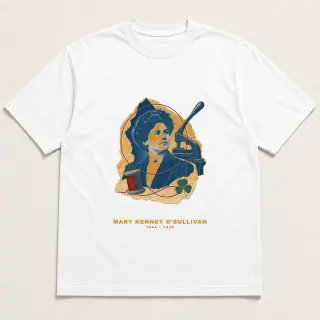 Design proof
 Mary Kenney O'Sullivan Collage Tee
$36.00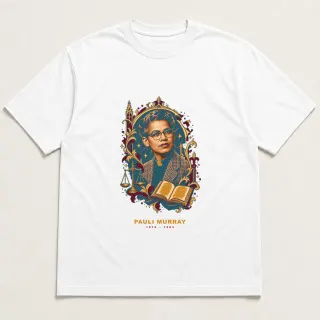 Design proof
 Pauli Murray Pixel Tee
$36.00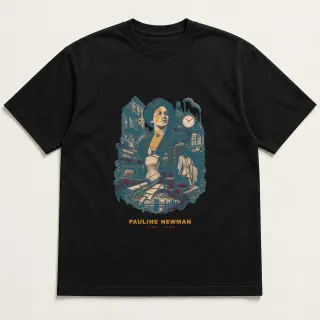 Design proof
 Pauline Newman Engraved Tee
$36.00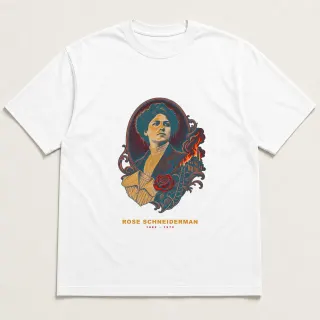 Design proof
 Rose Schneiderman Engraved Tee
$36.00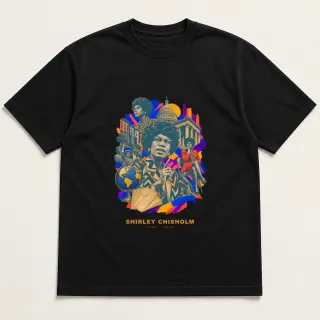 Design proof
 Shirley Chisholm Engraved Tee
$36.00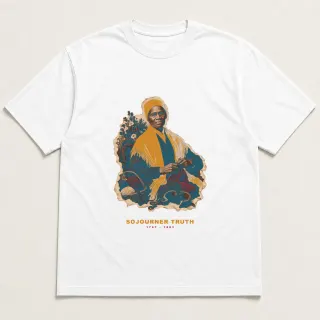 Design proof
 Sojourner Truth Collage Tee
$36.00Sources
#sourcesPrimary sources
The documents themselves: laws, court opinions, speeches, letters, and the numbers from the agencies that count them.
Secondary sources
Written afterward, about the story.
- U.S. National Park Service, "Suffrage in 60 Seconds: The Night of Terror"
- U.S. National Park Service, "National Woman's Party Protests During World War I" (picketing start date, arrest numbers, force-feeding)
- HISTORY, "The Night of Terror: When Suffragists Were Imprisoned and Tortured in 1917" (Whittaker's order, the March 1918 court ruling)
- Ms. Magazine, "Today in Feminist History: A Night of Terror in the Infamous Occoquan Workhouse" (Nov. 14, 2020)
- Ms. Magazine, "Today in Feminist History: Alice Paul and Other Suffragists Treated Inhumanely" (Nov. 9, 2020) (source of the November 9, 1917 quote)
- Feminist Majority Foundation, "Today in Herstory: Suffragist Alice Paul Kept in Hospital During Hunger Strike"
- Turning Point Suffragist Memorial, "November 9, 1917"
- Jacksonville Historical Society, "Forgetting Mary Nolan, the Oldest Picket"
- Chicago History Museum, "Chicago's Silent Sentinels"
- Wikipedia, "Leonora O'Reilly" (Wage Earners' Suffrage League founding date)
- Wikipedia, "Triangle Shirtwaist Factory fire"
- Gotham Center for New York City History, "A Vital Force: Immigrant Garment Workers and Suffrage"
- Village Preservation, "Rose Schneiderman: Making History at the Intersection of Labor and Women's Suffrage"
- Empire State Plaza, "Women's Suffrage" exhibit (confirms the November 6, 1917 date via its centennial framing)
- U.S. Senate Historical Office, "A Vote For Women" (the October 1, 1918 vote and Senator Wolcott)
- U.S. National Park Service, "State-by-State Race to Ratification of the 19th Amendment"
- Wikipedia, "Nineteenth Amendment to the United States Constitution" (Senate and Tennessee vote counts)
- U.S. National Park Service, "A Noble Endeavor: Ida B. Wells-Barnett and Suffrage"
- Fairfax County Convention and Visitors Corporation, "Suffragists at the Workhouse Arts Center"