Published
Rose Schneiderman
Rose Schneiderman Told New York It Had Been Tried and Found Wanting
Born April 6, 1882. Died August 11, 1972
Rose Schneiderman organized garment workers, fought for suffrage and labor law, and carried worker testimony into the New Deal.
The story
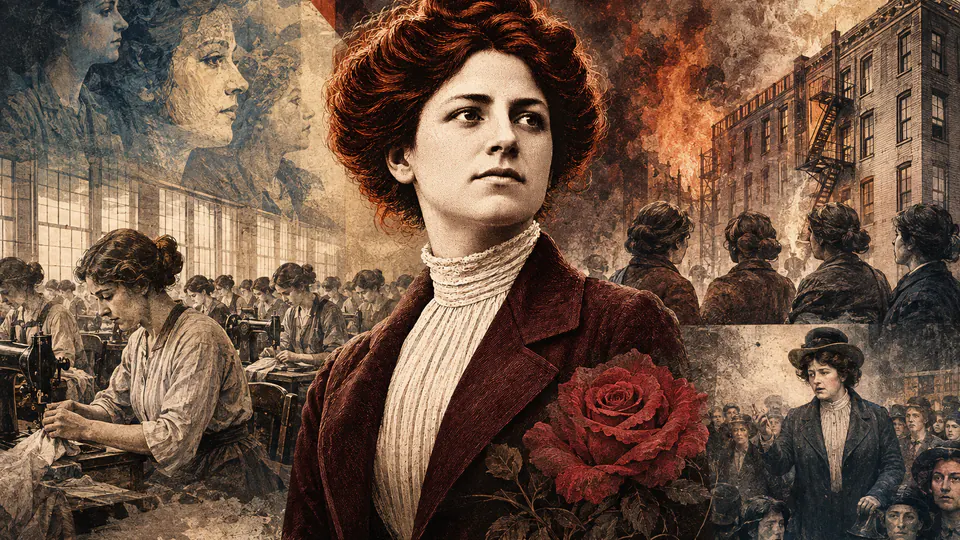
#storySix days after the Triangle fire killed 146 workers, Rose Schneiderman stood before a memorial meeting at the Metropolitan Opera House and refused the expected gratitude. Reformers and wealthy allies had come to mourn. Schneiderman told them workers had appealed to the public before and been ignored.
I would be a traitor to these poor burned bodies if I came here to talk good fellowship. We have tried you good people of the public and we have found you wanting.
The sentence landed because Schneiderman had organized the workers who knew the danger.
From a cap shop to the union league
Born in Russian Poland in 1882, Schneiderman came to New York as a child. Her father died soon after, and she left school for wage work. In a cap factory, she organized women into the United Cloth Hat and Cap Makers’ Union and helped win a strike.
The Women’s Trade Union League hired her in 1908. The league joined working women with wealthy reformers, a useful and uneasy arrangement. Schneiderman raised money, trained organizers, and pressed allies to accept workers as decision-makers rather than sad figures on a charity poster.
Bread, roses, and the vote
Schneiderman argued that low-wage women needed both economic power and political rights. She toured for women’s suffrage and helped win New York’s 1917 referendum. A 1911 speech attributed to her used bread and roses as the measure of a decent life, part of the phrase’s history before the Lawrence strike made it inseparable from labor memory.
After Triangle, Schneiderman worked with investigators and reformers including Frances Perkins. New York passed factory-safety and hour laws from the investigation. The point of her memorial speech was borne out in statute: sympathy mattered only when it changed a rule.
A worker’s voice inside government
Schneiderman became president of the National Women’s Trade Union League in 1926. She developed close relationships with Franklin and Eleanor Roosevelt and discussed labor conditions with them before and during the New Deal. In 1933 she was the only woman appointed to the National Recovery Administration’s Labor Advisory Board.
New York governor Herbert Lehman appointed her secretary of labor in 1937. She held the post until 1944, overseeing labor standards and employment administration in the state where she had first entered a factory as a teenager.
Schneiderman retired from union office in 1950 and died in 1972. Her route from cap maker to labor secretary can look like an individual success story. She spent her life arguing the opposite lesson. Workers needed institutions strong enough that survival did not depend on finding one exceptional person in the room.
The sequence changes the argument
Accounts often compress Rose Schneiderman into a reformer remembered for one line about bread and roses. The chronology makes a larger claim. Schneiderman entered factory work as a teenager and organized cap makers after seeing how low pay and unsafe shops disciplined women. She helped her local win a charter and became a leading organizer in the Women’s Trade Union League. Neither fact is background decoration. Together they explain why the conflict took the form it did and why participants did not treat patience as a serious answer.
During the 1909 garment strike, the league supplied money and publicity while workers supplied the risk, picket lines, and decisions. After the Triangle fire, Schneiderman rebuked respectable audiences who mourned dead workers while tolerating the system that killed them. The work depended on meetings, transportation, money, printed material, trusted messengers, and people willing to absorb retaliation. Public memory usually preserves the microphone or the confrontation. Organization lived in the less photogenic decisions that made a crowd, vote, strike, or policy demand possible.
Power worked through institutions
The central dispute concerned whether working women would speak for themselves in unions, legislatures, and national policy. That question could not be settled by a good argument alone. Employers, public officials, courts, parties, unions, churches, and newspapers controlled different resources. Organizers had to identify which body could change a rule, which ally could move it, and what pressure could make delay more expensive than action.
She campaigned for suffrage because labor law depended on officials who answered to voters and donors. As president of the national league, she supported organization and protective legislation while confronting class divisions among women reformers. Those outcomes belong in the same account. A movement can gain public sympathy and still lose an immediate demand. It can win a statute while leaving people outside its coverage. It can build an institution that later becomes cautious. Calling one moment a victory or defeat without naming the measure hides more than it explains.
The limits were part of the result
Her friendship with Eleanor Roosevelt carried workers’ conditions into New Deal discussions and federal advisory work. The protections she pursued often excluded domestic and agricultural labor, revealing the racial and occupational limits of reform. These limits were not footnotes added by later critics. Participants argued about them at the time, often from unequal positions. Race, gender, citizenship, occupation, geography, and access to money affected who took the greatest risk and who received authority after a campaign became respectable.
This is why coalition should be treated as work rather than a photograph. Groups can share an opponent while wanting different remedies. They can cooperate on a march and disagree about a contract, a party, a war, or the pace of change. The useful question concerns the rules that allowed people to decide together, what resources they shared, and whose objections were easier to ignore.
What the record lets us say
The source trail matters because later retellings reward drama and erase maintenance. Government records show what officials claimed and enforced. Organizational papers show plans, budgets, arguments, and revisions. Oral histories recover work that formal minutes often omit, though memory recorded years later has its own limits. Newspapers capture public language while reflecting the interests and racial habits of editors. Reading those records against one another makes uncertainty visible instead of filling it with a convenient quotation.
The durable lesson of Rose Schneiderman is practical. Rights need procedures, money, institutions, and people able to enforce them after attention moves elsewhere. A law can change the field without ending the contest. A lost campaign can train organizers, expose an alliance, or leave a demand that later movements can use. History becomes more useful when it preserves both the achievement and the bill that remained unpaid.
In their own words
#wordsWhat Rose Schneiderman actually said, where, and when. Each one links to the page it was checked against.
-
I would be a traitor to these poor burned bodies if I came here to talk good fellowship. We have tried you good people of the public and we have found you wanting.
Memorial meeting for the Triangle fire victims, Metropolitan Opera House, April 2, 1911, first published in The Survey, April 8, 1911. Cornell ILR, Rose Schneiderman, We Have Found You Wanting -
This is not the first time girls have been burned alive in the city. Every week I must learn of the untimely death of one of my sister workers. Every year thousands of us are maimed. The life of men and women is so cheap and property is so sacred.
The same April 2, 1911 memorial speech. Cornell ILR, Rose Schneiderman, We Have Found You Wanting -
Public officials have only words of warning to us--warning that we must be intensely peaceable, and they have the workhouse just back of all their warnings. The strong hand of the law beats us back, when we rise, into the conditions that make life unbearable.
The same April 2, 1911 memorial speech. Cornell ILR, Rose Schneiderman, We Have Found You Wanting -
I know from my experience it is up to the working people to save themselves. The only way they can save themselves is by a strong working-class movement.
Closing the same April 2, 1911 memorial speech. Cornell ILR, Rose Schneiderman, We Have Found You Wanting
What people get wrong
#wrong- The myth
Schneiderman's 1911 Triangle speech blamed only the factory owners. - The record
Her sharpest words that day targeted "you good people of the public" and officials who tolerated the fire-trap conditions while meeting workers' protests with "the strong hand of the law," not the owners alone.
- The myth
Her relationship with the Roosevelts was purely social. - The record
She was the only woman named to the National Recovery Administration's Labor Advisory Board, serving from 1933 to 1935, and Eleanor Roosevelt credited Schneiderman with teaching her what she knew about the trade union movement.
- The myth
Her union career ended once the Triangle speech made her famous. - The record
She kept organizing for decades afterward: president of the National Women's Trade Union League from 1926, the sole woman on the NRA's Labor Advisory Board in 1933, and New York secretary of labor from 1937 to 1944.
The dates that matter
#dates- April 6, 1882 Born in Sawin, Russian Poland.
- 1890 Immigrates with her family to New York.
- 1903 Organizes her cap shop into the United Cloth Hat and Cap Makers' Union.
- 1908 Becomes an organizer for the New York Women's Trade Union League.
- April 2, 1911 Delivers her found-you-wanting speech after the Triangle fire.
- 1917 Campaigns in the successful New York women's suffrage referendum.
- 1926 Becomes president of the National Women's Trade Union League.
- 1937-1944 Leads the state labor department as New York secretary of labor.
- August 11, 1972 Dies in New York City.
Questions people ask
#faqsWho was Rose Schneiderman?
Rose Schneiderman was a Polish Jewish immigrant, garment worker, union organizer, suffragist, and labor-policy adviser.
What did Rose Schneiderman say after the Triangle fire?
At an April 2, 1911 memorial meeting she said she would betray the burned workers if she spoke of fellowship and told the assembled public, 'we have found you wanting.'
Did Rose Schneiderman coin bread and roses?
A 1911 speech attributed to Schneiderman used the demand for bread and roses, but the phrase's record includes earlier labor and suffrage writing. The 1912 Lawrence strike later made it famous.
Did Rose Schneiderman work for the New Deal?
She advised Franklin and Eleanor Roosevelt and served as New York secretary of labor from 1937 to 1944. Her experience informed labor standards and social policy.
The bookshelf
#bookshelfWhere to go next. Buy from an independent bookstore, or find it at your library for nothing.
-
All for One Rose Schneiderman with Lucy Goldthwaite, 1967 primary
Her own memoir, from the cap shop to the New York labor department.
-
Solidarity Forever: Rose Schneiderman and the Women's Trade Union League Gary Endelman, 1981 secondary
The standard biography, built from her papers and the league's records.
Wear it: Rose Schneiderman
#merchEvery design here links back to this page.

Sources
#sourcesPrimary sources
The documents themselves: laws, court opinions, speeches, letters, and the numbers from the agencies that count them.
Secondary sources
Written afterward, about the story.