Published
LGBTQ Liberation
LGBTQ Liberation Grew From Survival, Refusal, and Organization
LGBTQ movements have fought criminalization, police violence, medical stigma, employment and housing discrimination, and exclusion from public life.
The story
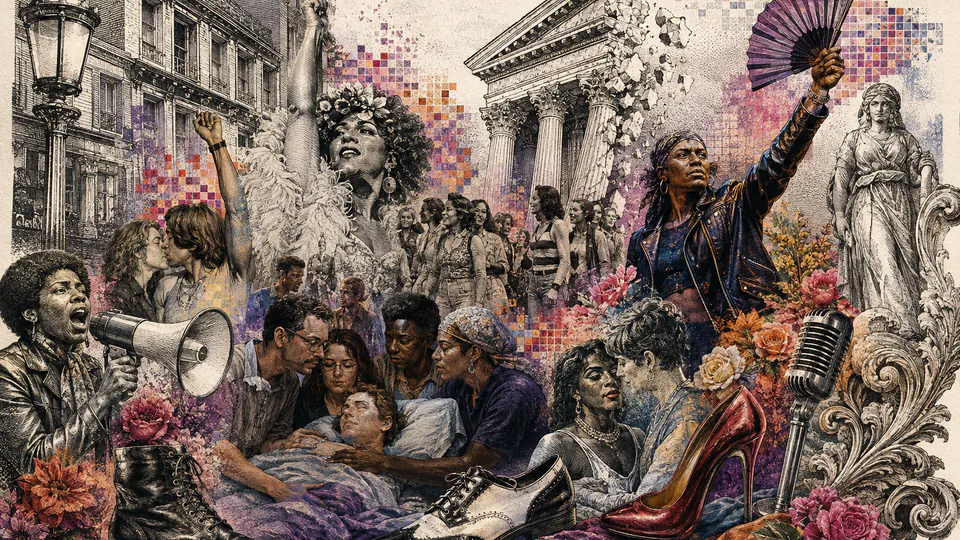
#storyLGBTQ liberation follows many routes through hiding, Pride, law, care, and resistance. It is a history of people making lives under criminal laws, police surveillance, employment bans, medical stigma, family rejection, and housing exclusion. Organizing grew from the places people already gathered: bars, private homes, bookstores, military units, church groups, theaters, clinics, and street communities.
Early organizations such as the Mattachine Society and Daughters of Bilitis used meetings, publications, research, and pickets to challenge persecution during the Lavender Scare. Other resistance was less formal. Patrons at Compton’s Cafeteria in San Francisco fought back against police in 1966. The Stonewall uprising in 1969 brought a larger break with cautious appeals for tolerance.
Equal rights and liberation are overlapping projects
Gay-liberation groups linked sexuality to war, racism, capitalism, policing, and gender roles. That broad politics produced coalitions and fractures. Trans people, poor people, lesbians, people of color, and sex workers repeatedly challenged groups that treated them as a liability. STAR made housing and survival part of movement work. Harvey Milk built an electoral coalition through local institutions and labor ties.
The AIDS crisis exposed the cost of stigma backed by state indifference. Communities created care networks while ACT UP used disruption, research, and media strategy to force faster drug trials, better public information, and broader access to treatment.
Court decisions later struck down sodomy laws, recognized same-sex marriage, and extended federal employment law. Those wins changed millions of lives. They did not settle access to housing, health care, bodily autonomy, public space, or safety from violence. Liberation remains the larger question: not only whether LGBTQ people can enter existing institutions, but whether those institutions let everyone live.
Before liberation had a public vocabulary
People made queer and trans lives long before organizations adopted the present set of initials. The record uses changing terms, some chosen and some imposed. Historians have to avoid translating every past identity into a current category while also refusing the old claim that such lives did not exist.
Police and federal agencies made many surviving records. Arrest logs, military discharges, immigration files, medical case histories, and vice reports describe people through institutions that punished them. Community newspapers, bar guides, letters, photographs, oral histories, and meeting minutes let people appear as friends, workers, artists, tenants, lovers, and political actors instead of cases.
The Lavender Scare removed suspected gay and lesbian employees from federal jobs and made disclosure economically dangerous. The Mattachine Society and Daughters of Bilitis created publications, discussion groups, legal defense, and early pickets. Their cautious clothing and appeals to respectability were strategic responses to a hostile period. Younger militants later criticized that caution, but they inherited networks the earlier groups had kept alive.
Police made gathering places into political ground
Bars could provide rare public meeting space while operating under licensing rules that invited raids, bribery, and surveillance. Owners were not always allies, and organized crime sometimes profited from exclusion elsewhere. Still, a raid attacked one of the few places where people could find one another.
Resistance did not begin with the Stonewall uprising. Patrons and street communities challenged police at Cooper Do-nuts in Los Angeles, Compton’s Cafeteria in San Francisco, and other sites whose records are less complete. Stonewall became a turning point because the resistance lasted across nights, occurred in a media capital, and was followed by organizations able to mark the anniversary and spread a liberation message.
Annual marches converted memory into recruitment. They also created recurring arguments over policing, corporate participation, public sexuality, and which bodies could appear without apology. Pride could be commemoration, protest, festival, and commercial event in the same street, with no guarantee those purposes would agree.
Liberation groups expanded the field of demands
The Gay Liberation Front linked sexuality with opposition to war, racism, and gender hierarchy. Lesbian feminists challenged male control inside gay groups and homophobia inside women’s organizations. Black and Latino organizers criticized movements that treated white experience as universal. Trans activists including Sylvia Rivera and Marsha P. Johnson joined public protest to housing, food, safety, and support for young people.
Those conflicts were about resources as much as recognition. A campaign may choose a claim that courts and legislators can readily hear, such as employment equality, while postponing police violence against sex workers or shelter access for trans people. People facing the greatest danger then become symbols of movement courage without receiving the movement’s money or institutional protection.
Coalition work does not require pretending every LGBTQ person shares one politics. Class, race, disability, religion, immigration status, and geography shape both risk and strategy. A rural teenager, an incarcerated trans woman, a married professional, and an elder living with HIV may need different institutions. Liberation has to hold those differences without letting the most secure members define the finish line.
AIDS turned care and expertise into confrontation
The AIDS epidemic killed people while public officials delayed, moralized, or treated death as evidence against the people dying. Gay men and their allies built service organizations, buddy programs, legal aid, safer-sex education, memorial practices, and systems for sharing medical information. Lesbians provided major care and organizing labor. Black and Latino communities confronted illness alongside unequal access to health care and media neglect.
ACT UP combined disruption with close study of drug trials, regulatory procedure, insurance, and research design. Members learned the technical language that officials used to exclude them and then argued over the rules in public. Actions targeted the Food and Drug Administration, pharmaceutical companies, news organizations, churches, and government agencies.
Treatment advances changed HIV from an almost certain death sentence into a manageable condition for many people with access to medicine. Access remains unequal within the United States and around the world. The epidemic therefore belongs to both movement history and current policy, including prevention, testing, pricing, housing, stigma, and the criminalization of people living with HIV.
Courts removed barriers that organizing had exposed
Litigation dismantled major parts of legal inequality. Lawrence v. Texas invalidated remaining state sodomy laws in 2003. Obergefell v. Hodges recognized same-sex marriage nationwide in 2015. Bostock v. Clayton County held in 2020 that federal employment discrimination law covers sexual orientation and gender identity.
Each ruling changed daily life, and none arrived through judicial insight alone. Plaintiffs, lawyers, local groups, public education, earlier losses, and shifting political power prepared the cases. Enforcement still depends on a person knowing the right, finding counsel, surviving the process, and obtaining a remedy.
Marriage offered inheritance, immigration status, health coverage, and parental security to many couples. Its prominence also concentrated money and attention on an institution not everyone can or wants to enter. A movement can celebrate a material gain while asking what remains for people whose immediate need is a safe bed, a name on an identity document, medical care, or freedom from detention.
Survival keeps setting the agenda
LGBTQ liberation is sometimes told as steady progress from secrecy to visibility. The record is less orderly. Visibility can produce community and expose a person to violence. A legal victory can coexist with school censorship, health-care barriers, eviction, and punitive policing. Rights can expand and then come under organized attack.
The movement’s durable institutions do more than represent an identity. They keep archives, defend tenants, answer hotlines, provide health care, support prisoners, train lawyers, open cultural space, and help people survive long enough to organize. Their work makes the larger demand measurable: public life in which no one must trade safety for honesty, and equality that reaches people before they become an acceptable test case.
Argue it
#argue4 claims about LGBTQ Liberation you can make out loud, the best case against each one, and the answer. Every number links to where it came from.
-
Claim 1
Firing someone for being gay or transgender is already illegal sex discrimination under federal law.
The evidence
The Supreme Court held in Bostock v. Clayton County, decided June 15, 2020 by a 6-3 vote with Justice Neil Gorsuch writing for the majority, that an employer who fires a worker merely for being gay or transgender violates Title VII of the Civil Rights Act of 1964. The Court reasoned that such a firing cannot happen without the employer factoring in the worker's sex, so it counts as sex discrimination under the statute's own text. The ruling applies nationwide, including in states with no state-level nondiscrimination law of their own.
Their best case
Alliance Defending Freedom represented web designer Lorie Smith and won 303 Creative v. Elenis at the Supreme Court on June 30, 2023, a 6-3 ruling also authored by Justice Gorsuch, holding that Colorado's public accommodation law could not force her to design wedding websites celebrating same-sex marriages. ADF argues the government cannot force Americans to create expression that contradicts their beliefs, and frames Smith's objection as being about the message she is asked to create, not the identity of who is asking for it.
The answer
303 Creative does not touch Bostock. The question the Court took was whether a public accommodation law can compel an artist to create custom expressive speech, and the opinion stays inside that category: commissioned expressive work like a wedding website, not hiring and firing. Firing a worker is not speech, so the 303 Creative majority left Title VII exactly where Bostock put it.
-
Claim 2
Tennessee's ban on gender-affirming care for trans minors survived the Supreme Court on the loosest test in constitutional law, not on the evidence.
The evidence
In United States v. Skrmetti, decided June 18, 2025 by a 6-3 vote with Chief Justice John Roberts writing the majority, the Supreme Court held that Tennessee's law prohibiting puberty blockers and hormone therapy for transgender minors is not subject to heightened scrutiny under the Equal Protection Clause. It has to survive only rational basis review, the most forgiving standard in constitutional law, which asks whether a law is plausibly connected to a legitimate government interest.
Their best case
Tennessee Attorney General Jonathan Skrmetti's office defended the law by pointing to real uncertainty in the evidence base, the same uncertainty the United Kingdom's Cass Review documented. That April 2024 review, led by pediatrician Dr. Hilary Cass, found the evidence for puberty blockers in young people with gender dysphoria was of poor quality, and that no firm conclusions could be drawn about hormone therapy's effect on gender dysphoria, body satisfaction, psychosocial health, cognitive development, or fertility.
The answer
The evidence-quality finding is real. Cass did not recommend a ban: her review kept puberty blockers available inside a formal clinical trial and kept hormone therapy available from age 16, with extreme caution recommended before 18, because uncertain evidence argues for more research. Tennessee wrote a flat prohibition with no clinical-trial pathway, a different policy than the one that finding supports. Rational basis review let it stand without weighing outcome data at all, including a 2020 study by Jack Turban and colleagues in which transgender adults who wanted and received pubertal suppression as adolescents reported significantly lower lifetime suicidal ideation than those who wanted it and did not receive it. A separate study found average suicidality at about a quarter of pretreatment levels after roughly a year of hormone therapy.
-
Claim 3
Marriage equality is settled law with rising majority support, not a precedent hanging by one vote.
The evidence
The Supreme Court recognized a constitutional right to same-sex marriage nationwide in Obergefell v. Hodges, decided 5-4 on June 26, 2015 with Justice Anthony Kennedy writing the majority. A decade later, Gallup's May 2025 poll found 68 percent of Americans think same-sex marriages should be legally recognized with the same rights as other marriages, up from 27 percent when Gallup first asked the question in 1996.
Their best case
Justice Clarence Thomas, concurring in Dobbs v. Jackson Women's Health Organization on June 24, 2022, wrote that the Court should reconsider all of its substantive due process precedents, including Griswold v. Connecticut, Lawrence v. Texas, and Obergefell v. Hodges, on the reasoning that any substantive due process decision is "demonstrably erroneous" and the Court has "a duty to correct the error" those precedents established.
The answer
No other justice joined that part of Thomas's opinion, and the Dobbs majority, written by Justice Alito, said directly: "Nothing in this opinion should be understood to cast doubt on precedents that do not concern abortion." Public support for marriage equality has kept climbing since Obergefell rather than eroding. A solo concurrence is not a vote to overturn anything, and no such vote has been cast in the decade since.
-
Claim 4
PrEP cuts the risk of getting HIV from sex by about 99 percent, and the country still cannot say how many of the people who need it get it.
The evidence
According to hiv.gov, PrEP reduces the risk of getting HIV from sex by about 99 percent when taken as prescribed, and by at least 74 percent among people who inject drugs. The CDC's April 2024 surveillance report still counted an estimated 31,800 new HIV infections in the United States in 2022, a 12 percent decline from 2018: real progress, but nowhere near zero.
Their best case
The CDC itself says the country cannot currently answer how well PrEP is reaching the people who need it. As of its April 2024 guidance, the agency had paused its PrEP coverage reporting to determine the best methodology for calculating coverage, advised against citing specific PrEP coverage figures in the meantime, and said it planned to resume reporting in June 2025.
The answer
That caution is about measurement rather than effectiveness: the 99 percent and 74 percent figures come from clinical evidence, while the coverage estimate the CDC paused is a separate exercise. The outcomes are still counted. The Ryan White HIV/AIDS Program, the country's main safety net for people already living with HIV, served more than half a million people in 2022, over half of everyone in the country with a diagnosis, and 68 percent of them reached viral suppression against 58 percent of people with HIV outside the program. The CDC paused a count, not a treatment.
What people get wrong
#wrong- The myth
Bostock v. Clayton County means federal law now protects LGBTQ people from discrimination everywhere, including housing and public accommodations. - The record
Bostock is a Title VII employment case, decided June 15, 2020 by a 6-3 vote. Its reasoning about sex discrimination governs workplace firing decisions under federal civil rights law; the Court has not extended that holding itself to housing, lending, or public accommodations, so protection in those areas still depends on separate statutes, state law, and agency rules that vary by place.
- The myth
The Cass Review concluded that gender-affirming care harms trans youth and called for banning it. - The record
The April 2024 review, led by pediatrician Dr. Hilary Cass, found the research evidence behind puberty blockers and hormone therapy for young people was of poor quality, not that the treatments were proven to cause harm. Its recommendation kept puberty blockers available inside a formal clinical trial and kept hormone therapy available from age 16 with caution: a research-and-caution framework, not a prohibition.
- Independent Review of gender identity services for children and young people (the Cass Review), final report, April 2024
- Christian Medical & Dental Associations, summary of the Cass Review final report
- The myth
HIV and AIDS are a solved, historical problem in the United States. - The record
The CDC's April 2024 surveillance report estimated 31,800 new HIV infections in the country in 2022, a real decline of 12 percent from 2018 but far from zero, and CDC materials put the number of people currently living with HIV in the United States at roughly 1.1 million.
- The myth
Same-sex marriage became legal nationwide because Congress passed a law. - The record
It became legal through Obergefell v. Hodges, a Supreme Court constitutional ruling decided 5-4 on June 26, 2015, holding the Fourteenth Amendment requires every state to license and recognize same-sex marriages. No act of Congress created the right, which is why a later concurrence in a different case could call on the Court to revisit it.
The dates that matter
#dates- 1924 The Society for Human Rights forms in Chicago and publishes Friendship and Freedom.
- 1950-1955 The Mattachine Society and Daughters of Bilitis organize during the Lavender Scare.
- 1966 Compton's Cafeteria patrons resist police harassment in San Francisco.
- June 1969 The Stonewall uprising accelerates gay-liberation organizing.
- 1973 The American Psychiatric Association removes homosexuality from its diagnostic manual.
- 1987 ACT UP forms amid government failure during the AIDS crisis.
- 2003 Lawrence v. Texas invalidates remaining state laws against consensual same-sex intimacy.
- 2015 Obergefell v. Hodges recognizes a constitutional right to same-sex marriage.
- 2020 Bostock v. Clayton County applies federal employment protections to sexual orientation and gender identity.
Questions people ask
#faqsDid LGBTQ rights begin at Stonewall?
No. Stonewall was a major turning point built on decades of community formation, legal challenges, publications, direct action, and earlier resistance to police.
What is the difference between gay rights and LGBTQ liberation?
Gay rights often describes equal legal treatment within existing institutions. Liberation movements have also questioned policing, gender rules, family norms, poverty, medical authority, and whose needs a movement centers.
Why is the AIDS crisis central to LGBTQ history?
AIDS killed vast numbers of people amid stigma and government neglect. Groups such as ACT UP forced changes in research, drug approval, treatment access, public information, and political accountability.
How should LGBTQ Liberation be evaluated?
Separate the immediate result from the institutions, tactics, exclusions, and enforcement record that followed it.
The bookshelf
#bookshelfWhere to go next. Buy from an independent bookstore, or find it at your library for nothing.
-
The Stonewall Reader Edited by Jason Baumann for the New York Public Library, 2019 secondary
Newspaper clippings, oral histories, and flyers from the uprising and the movement it fed, gathered in one place.
-
And the Band Played On: Politics, People, and the AIDS Epidemic Randy Shilts, 2007 secondary
Reporting on the epidemic's first years and the official response that came too slowly, by the journalist who covered it firsthand.
-
Transgender History Susan Stryker, 2017 secondary
A history of trans politics and organizing in the United States, from the mid-twentieth century through recent legal fights.
-
Stonewall Martin Duberman, 1994 secondary
A close narrative history of the years around 1969, built from interviews with people who were there.
-
How to Survive a Plague David France, 2016 secondary
ACT UP's fight with drug regulators and pharmaceutical companies, told by a journalist who lived through it.
Wear it: LGBTQ Liberation
#merchEvery design here links back to this page.
 Design proof
 Audre Lorde Pixel Tee
$36.00 Design proof
 Gloria Anzaldúa Pixel Tee
$36.00 Design proof
 Harvey Milk Pixel Tee
$36.00 Design proof
 James Baldwin Engraved Tee
$36.00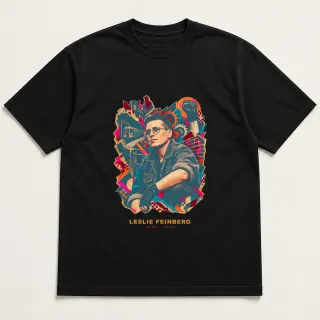 Design proof
 Leslie Feinberg Pixel Tee
$36.00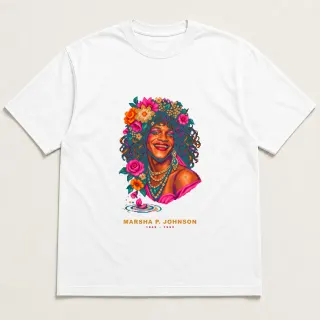 Design proof
 Marsha P. Johnson Pixel Tee
$36.00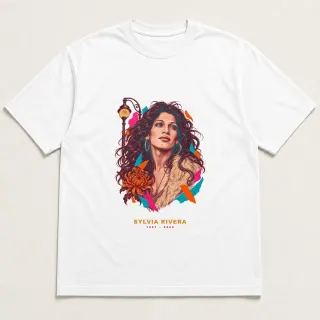 Design proof
 Sylvia Rivera Engraved Tee
$36.00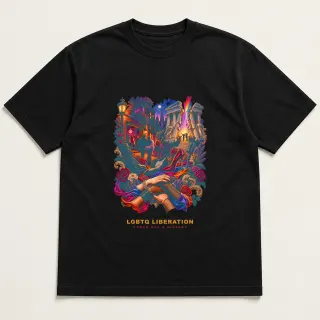 Design proof
 LGBTQ Liberation Engraved Tee
$36.00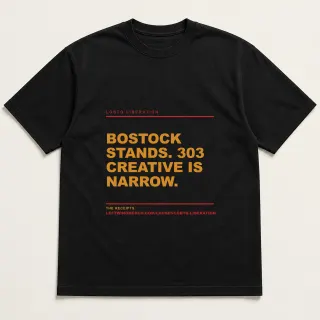 Design proof
 "Bostock stands. 303 Creative is narrow." Tee
$36.00 Design proof
 "Bostock stands. 303 Creative is narrow." Sticker
$5.00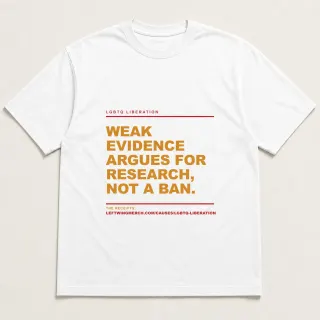 Design proof
 "Weak evidence argues for research, not a ban." Tee
$36.00 Design proof
 "Weak evidence argues for research, not a ban." Sticker
$5.00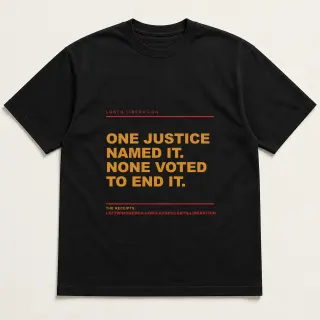 Design proof
 "One justice named it. None voted to end it." Tee
$36.00 Design proof
 "One justice named it. None voted to end it." Sticker
$5.00 Design proof
 "PrEP works. Counting who gets it lags." Tee
$36.00 Design proof
 "PrEP works. Counting who gets it lags." Sticker
$5.00Sources
#sourcesPrimary sources
The documents themselves: laws, court opinions, speeches, letters, and the numbers from the agencies that count them.
- New York Public Library, ACT UP New York records
- Supreme Court, Bostock v. Clayton County opinion
- Alliance Defending Freedom, case page on 303 Creative v. Elenis (ADF's own statement of its position, in its own words)
- Independent Review of gender identity services for children and young people (the Cass Review), final report, April 2024 (the review's site now lives in the UK National Archives web archive)
- Dobbs v. Jackson Women's Health Organization, 597 U.S. (2022), opinion text via Legal Information Institute, Cornell Law School
- Gallup, "Record Party Divide 10 Years After Same-Sex Marriage Ruling" (May 2025 poll)
- HIV.gov, "Pre-Exposure Prophylaxis"
- CDC, HIV Surveillance, facts and stats
Secondary sources
Written afterward, about the story.
- National Park Service, Parks and LGB Heritage
- Library of Congress, LGBTQ Studies Research Guide
- National Archives, LGBTQ Records
- National Park Service, Stonewall National Monument
- CDC, HIV and AIDS Timeline
- New York Public Library, Gay and Lesbian Collections
- SCOTUSblog case file, Bostock v. Clayton County, Georgia
- SCOTUSblog case file, 303 Creative LLC v. Elenis
- SCOTUSblog case file, United States v. Skrmetti
- Christian Medical & Dental Associations, summary of the Cass Review final report
- The Trevor Project, research brief "Gender-Affirming Care for Youth," reproducing Turban et al. (2020) and Allen et al. (2019)
- SCOTUSblog case file, Obergefell v. Hodges
- KFF, "The Ryan White HIV/AIDS Program: The Basics"