Published
Anti-War Movements
Anti-War Movements Fight the War and the Machinery That Makes the Next One
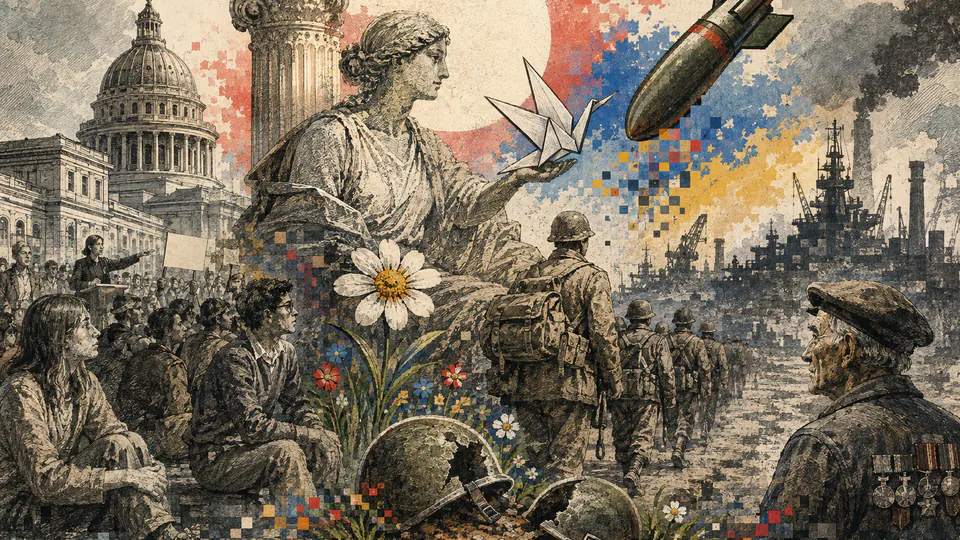
U.S. anti-war movements have joined pacifism, anti-imperialism, draft resistance, labor action, civil disobedience, veterans' organizing, and mass protest.
The story
#storyAnti-war movements begin with a refusal: a government may declare a war necessary, but citizens do not have to accept its story, supply its bodies, or treat its costs as inevitable. The people who act on that refusal rarely agree on everything else.
Some are pacifists who reject violence as a method. Others oppose a specific war, conscription, colonial rule, nuclear weapons, military spending, or an alliance. That variety can build reach and create strain. A coalition that can fill a street may not agree on what peace requires the morning after.
States police the boundary of acceptable dissent
During World War I, the Espionage and Sedition Acts helped imprison organizers such as Eugene Debs. Conscientious objectors faced prison and abuse. Cold War anticommunism narrowed debate again. The recurring accusation is that opposition gives comfort to an enemy, turning political disagreement into suspected disloyalty.
Vietnam produced draft-card burning, campus strikes, clergy resistance, mass marches, GI organizing, draft counseling, civil disobedience, and veterans’ testimony. The movement grew as casualties mounted and official claims lost credibility. It did not single-handedly end the war, but it altered elections, military planning, public trust, and the government’s freedom to escalate.
Martin Luther King Jr. linked the war to racism and poverty. Dorothy Day maintained pacifism when it cost her movement support. A. J. Muste connected labor education, civil rights, and resistance to militarism.
Large protests can announce opposition. Sustained anti-war work also follows budgets, supports resisters, learns from people under bombardment, protects dissent, and organizes inside institutions asked to conduct the war. Peace requires a contest over who gets to define security and whose lives count when they do.
The first fight is often over information
War expands executive secrecy while increasing the public need for reliable evidence. Officials select intelligence, restrict reporters, classify records, and describe military setbacks as progress. Opponents therefore spend much of their time testing the official account. Soldiers’ letters, casualty reports, photographs, leaked documents, investigative reporting, and testimony from people living in the war zone can change what the public is able to know.
That work carries its own risks. The Espionage Act of 1917 punished interference with the war effort and became a tool against socialist publications and organizers. During the Vietnam War, government surveillance targeted peace groups alongside Black freedom, Indigenous, feminist, and student organizations. Informants disrupted meetings and encouraged suspicion. A movement had to oppose a war while defending its right to collect facts about it.
Public knowledge does not move in one direction. Images of violence can provoke opposition, but governments and media can strip the people under attack of political agency and reduce them to scenery. Serious internationalism asks what Vietnamese, Iraqi, Afghan, Filipino, Central American, or Palestinian organizers say about the forces shaping their lives. Opposition becomes weaker when it imagines the U.S. protester as the only actor in the story.
Conscription turned policy into a household decision
A draft forces the question of war into schools, workplaces, churches, and families. During World War I, conscientious objectors could face military prison and brutal treatment. During Vietnam, the Selective Service System distributed risk unequally. College deferments protected many men with money and access to higher education, while working-class men and men of color carried heavier exposure to induction and combat.
Draft counseling translated a large moral argument into deadlines, forms, hearings, and legal categories. Resistance included conscientious-objector claims, refusal of induction, exile, sanctuary, draft-card destruction, and disruption of induction centers. Each tactic imposed different costs. Some people could risk arrest or flight; others had dependents, immigration concerns, or no financial cushion.
Women could neither be drafted nor easily claim authority in public debate, yet they organized counseling offices, fundraising, research, and demonstrations. Their labor often sustained organizations whose visible spokespeople were men. Feminist critics also challenged the idea that citizenship and adulthood should be proved through military service.
Soldiers and veterans contested the war from inside
Military dissent complicates the claim that protest comes from people who know nothing about war. During Vietnam, active-duty personnel published underground papers, formed coffeehouses near bases, resisted orders, and contacted civilian organizers. Vietnam Veterans Against the War used marches, public testimony, medals returned at the Capitol, and the 1971 Dewey Canyon III action to dispute official representations of the conflict.
Veterans possess experience, not a single political conclusion. Some defend a war; others oppose it for moral, strategic, or political reasons. Anti-war coalitions can use veteran testimony without treating military service as the price of admission to public debate. Civilians subject to bombing and occupation possess another form of knowledge that deserves at least equal weight.
The veteran role also keeps consequences in view after a withdrawal. Disability, toxic exposure, trauma, homelessness, and inadequate care survive the last news broadcast. So do unexploded weapons and damaged infrastructure in the countries where fighting occurred. A peace settlement that neglects those obligations only moves the cost off the defense ledger.
Labor can interrupt the material chain
Wars require loading, transport, production, communications, taxes, and political consent. Workers occupy each link. Longshore workers can refuse military cargo. Teachers and students can stop ordinary campus business. Researchers can reject weapons contracts. Union members can debate whether pension funds and workplaces are tied to military production.
Such action is difficult because military spending also supports jobs. A worker in a weapons plant can oppose war and still need a paycheck. Calls to cut military budgets are stronger when paired with a conversion plan that preserves income, skills, and community investment. Otherwise, contractors can present the choice as endless procurement or unemployment.
The labor movement has rarely spoken with one voice. Some leaders have backed war in exchange for government access or defense employment; rank-and-file caucuses and particular unions have opposed it. A. J. Muste spent years trying to connect worker power with pacifist action because he understood that a moral appeal without an economic base could be ignored.
A march is a pressure point, not a finish line
The largest anti-war demonstrations make opposition visible to officials, media, and people who believed they were alone. Their scale can change the political weather. They can also become rituals if no institution carries the work into the next week.
Movements exert pressure through elections, court defense, lobbying, mutual aid, tax resistance, base campaigns, campus organizing, congressional testimony, and support for resisters. Different tactics reach different decision points. A city council resolution will not halt a bombing campaign, but it can disclose local contracts or protect organizers. A congressional vote may constrain funding, but only after organized constituents make support for war politically costly.
Success is rarely a clean causal claim. Vietnam ended through Vietnamese resistance, military and political crisis, changing U.S. public opinion, electoral pressure, and organizing inside and outside the armed forces. Anti-war movements mattered without owning the result. Their lasting test is whether they reduce the machinery available for the next war, protect the people who resist it, and make peace more substantial than the pause between deployments.
What people get wrong
#wrong- The myth
Antiwar dissent during World War I was mostly tolerated as ordinary free speech. - The record
In Debs v. United States (1919), the Supreme Court unanimously upheld Eugene Debs's conviction under the Espionage Act, and his ten-year concurrent sentences, for a June 16, 1918 speech in Canton, Ohio opposing the war. Justice Holmes wrote that wartime speech lost First Amendment protection once a jury found it intended to obstruct military recruiting.
- The myth
COINTELPRO targeted Black liberation and communist organizations but left the mainstream Vietnam antiwar movement alone. - The record
The Senate's Church Committee named the anti-Vietnam War movement directly, alongside the Southern Christian Leadership Conference and Martin Luther King Jr. individually, as a target of the FBI's long-running COINTELPRO program of covert disruption.
The dates that matter
#dates- 1846 Henry David Thoreau is jailed after refusing a tax in protest of slavery and the war with Mexico.
- 1898 The Anti-Imperialist League forms during U.S. war and colonial expansion.
- 1917-1918 The government prosecutes war opponents under the Espionage and Sedition Acts.
- 1923 The War Resisters League is founded in the United States.
- April 1965 Students for a Democratic Society organizes a large march against the Vietnam War in Washington.
- October 1967 A mass march confronts the Pentagon.
- October-November 1969 Moratorium demonstrations mobilize millions against the Vietnam War.
- February 15, 2003 Coordinated protests around the world oppose the coming invasion of Iraq.
Questions people ask
#faqsAre all anti-war activists pacifists?
No. Pacifists reject war or violence on moral grounds, while other anti-war organizers oppose a particular intervention, imperial policy, conscription, military spending, or strategy.
Did anti-war protests end the Vietnam War?
They did not act alone, but they changed public opinion, raised political costs, supported draft resistance, exposed official claims, and constrained policymakers alongside Vietnamese resistance and battlefield developments.
Why do veterans organize against war?
Veterans can bring direct testimony about military institutions and war's effects. Groups from Vietnam Veterans Against the War to Veterans For Peace have used that position to challenge official accounts.
How should Anti-War Movements be evaluated?
Separate the immediate result from the institutions, tactics, exclusions, and enforcement record that followed it.
The bookshelf
#bookshelfWhere to go next. Buy from an independent bookstore, or find it at your library for nothing.
-
Walls and Bars Eugene V. Debs, 1927 primary
Debs's own account of prison, written after the Espionage Act sentence that his 1918 antiwar speech earned him.
-
The War Within: America's Battle over Vietnam Tom Wells, 1994 secondary
A comprehensive history of the movement built from participant interviews and declassified records.
-
Soldiers in Revolt: GI Resistance During the Vietnam War David Cortright, 1975 secondary
The case for the movement inside the military itself, from underground papers to Dewey Canyon III.
-
The Sixties: Years of Hope, Days of Rage Todd Gitlin, 1987 secondary
A movement participant's history of the decade's organizing, splits, and costs.
Wear it: Anti-War Movements
#merchEvery design here links back to this page.
 Design proof
 Chris Hedges Engraved Tee
$36.00 Design proof
 Howard Zinn Engraved Tee
$36.00 Design proof
 Noam Chomsky Pixel Tee
$36.00 Design proof
 Pete Seeger Collage Tee
$36.00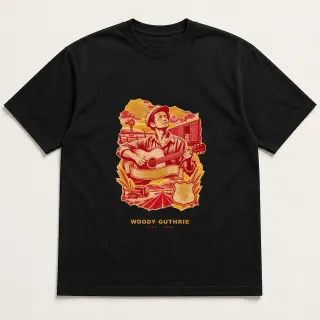 Design proof
 Woody Guthrie Collage Tee
$36.00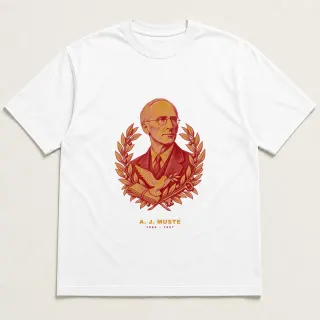 Design proof
 A. J. Muste Engraved Tee
$36.00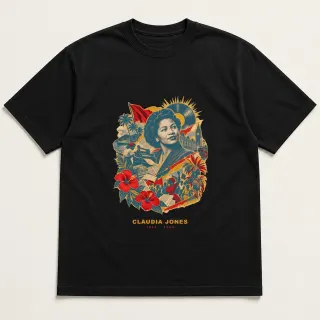 Design proof
 Claudia Jones Collage Tee
$36.00 Design proof
 Daniel Berrigan Pixel Tee
$36.00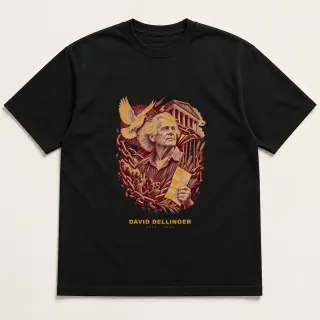 Design proof
 David Dellinger Engraved Tee
$36.00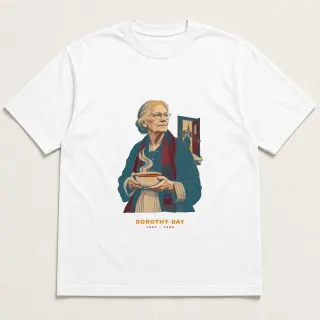 Design proof
 Dorothy Day Collage Tee
$36.00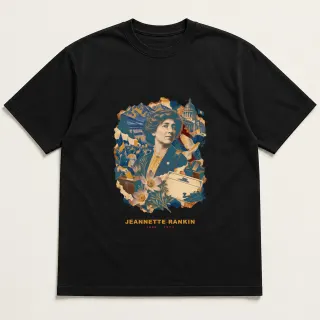 Design proof
 Jeannette Rankin Collage Tee
$36.00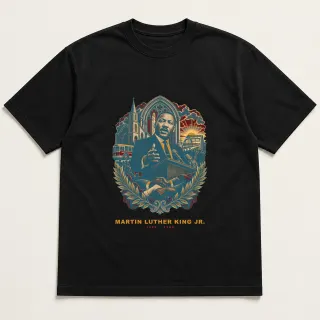 Design proof
 Martin Luther King Jr. Engraved Tee
$36.00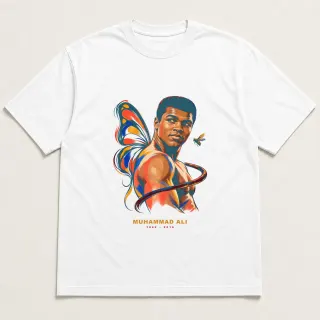 Design proof
 Muhammad Ali Engraved Tee
$36.00 Design proof
 Norman Thomas Collage Tee
$36.00 Design proof
 Anti-War Movements Pixel Tee
$36.00Sources
#sourcesPrimary sources
The documents themselves: laws, court opinions, speeches, letters, and the numbers from the agencies that count them.
Secondary sources
Written afterward, about the story.
- Library of Congress, Vietnam War Collections
- Swarthmore College Peace Collection
- National Archives, Vietnam War Protest
- Smithsonian, The Vietnam War
- Veterans For Peace
- National Archives, Fighting on Three Fronts
- National Archives, Vietnam Veterans Against the War
- Library of Congress, World War I and the Espionage Act
- U.S. Senate, "Church Committee Created"