Published
Flint sit-down strike
The Flint Sit-Down Strike: 44 Days Inside the Plant That Built the UAW
Flint autoworkers occupied two GM plants for 44 days in 1936-37, survived a police attack, and forced General Motors to recognize the UAW.
The story
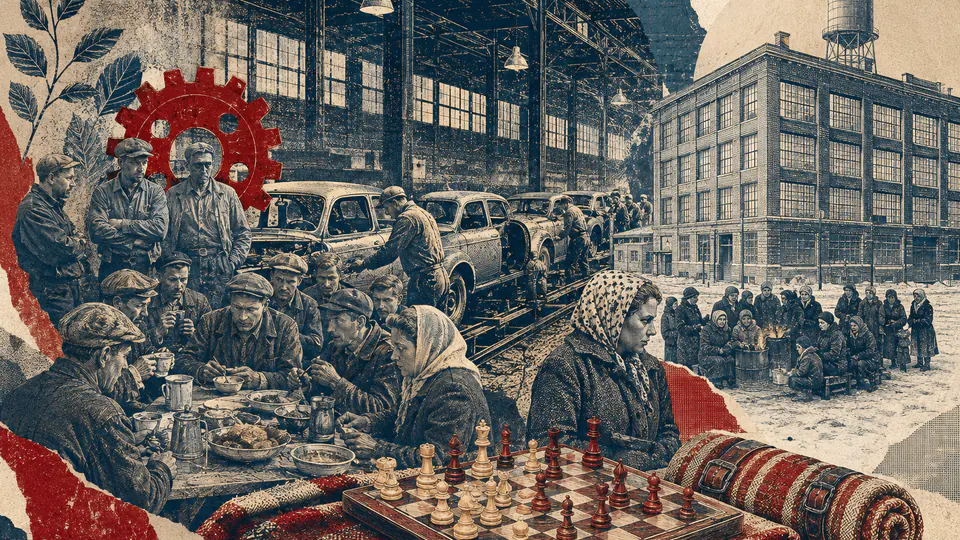
#storyOn the morning of December 30, 1936, word reached the United Auto Workers local in Flint, Michigan that General Motors was moving the dies, the massive stamping tools that shape every body panel, out of Fisher Body Plant No. 1. Empty the dies out and GM could keep building car bodies somewhere non-union while a strike in Flint accomplished nothing. UAW organizer Bob Travis called a lunchtime meeting at the union hall across the street, laid out what was happening, and sent the members back across the street. They walked in, stopped the line, and stayed. No picket signs, no walkout, hands off the machines and bodies still inside the building. Forty-four days later, on February 11, 1937, General Motors signed a one-page agreement recognizing the United Auto Workers, the first time a major American automaker had recognized an industrial union. In between, the strikers held two plants and survived a police attack that the record still calls the Battle of the Running Bulls.
Why sit down instead of walking out
A picket line left a strike exactly where an employer wanted it: outside the building. A company could hire replacements, walk them past the picket with police alongside, and keep the machines running while the union argued its case to nobody. Staying inside flipped that. GM could not run Fisher Body No. 1 without physically clearing hundreds of men out first, and clearing them out meant sending police into a building packed with machinery, glass, and stacked auto parts the company needed intact. Every assault on a sit-down risked wrecking the factory GM was fighting to keep running, the same industrial-union logic that Eugene Debs’s American Railway Union had chased four decades earlier: one union for the whole industry instead of one for each craft, a fight Debs lost and the UAW was about to win. Within days, workers held Fisher Body Plant No. 2 as well (accounts differ on which of the two plants actually sat down first that week), and two of GM’s key Flint plants sat idle with union men living inside them. Across GM’s struck operations, roughly 136,000 workers eventually went idle at 17 plants.
The Battle of the Running Bulls
Fisher Body Plant No. 2 got the harder test. On the night of January 11, 1937, plant guards tried to cut off the strikers’ food, and when the confrontation escalated, city police arrived at the gates with tear gas, buckshot, and their sidearms. For hours, strikers barricaded inside answered with the plant’s fire hoses and whatever metal was in reach: bolts, bottles, hinges, while police fired into the crowd gathered outside. By the count History.com uses, sixteen strikers and eleven police officers were hurt before it ended.
The turn came from a 23-year-old striker’s wife named Genora Johnson (later Genora Johnson Dollinger). She grabbed the loudspeaker on the union’s sound car and went after the police directly:
Cowards Cowards Shooting into the bellies of unarmed men and firing at the mothers of children.
Then she turned to the women in the crowd:
Break through those police lines and come down here and stand beside your husbands and your brothers and your uncles and your sweethearts.
Some of them did, walking toward the gunfire, and the police broke off rather than fire into a crowd that now included women. The name that stuck, the Battle of the Running Bulls, mocks the outcome: bulls being period slang for police, and Bull Run being the Civil War battle where an army famously ran the other way. In the weeks after, Johnson turned the improvised defense into a standing unit, recruiting about 400 of the roughly 1,000 women already supporting the strike into the Women’s Emergency Brigade, identified by red berets and armbands marked E.B.
The governor who would not send troops in
Governor Frank Murphy, a Democrat who had campaigned as a friend of labor, answered the Battle of the Running Bulls by sending about 1,200 Michigan National Guard troops into Flint. He used them to keep city police and company guards away from the plants, not to clear the strikers out, despite pressure to intervene by force, including from the Vice President, who urged federal action against the strike. Murphy’s own Guard officers told him a forced eviction “would result in bloodshed and riot,” and he kept negotiating instead. More than a year later, defending Murphy against accusations of treason over his handling of the strike, President Roosevelt credited the governor’s restraint with saving “hundreds and even thousands of human lives.”
The courts had already tried the legal route once. In early January 1937, Genesee County Circuit Judge Edward Black issued an injunction ordering the strikers out of both Fisher plants, until a union lawyer checked the county records and found that Black personally owned 3,365 shares of General Motors stock. A judge is not supposed to rule on a case he holds stock in, and the injunction collapsed. When GM and the courts pushed a new eviction deadline in early February, the strikers still holding Fisher No. 1 wired the governor directly:
Governor, we have decided to stay in the plant. We have no illusions about the sacrifices which this decision will entail. We fully expect that if a violent effort is made to oust us many of us will be killed and we take this means of making it known to our wives, to our children, to the people of the state of Michigan and the country, that if this result follows from the attempt to eject us, you are the one who must be held responsible for our deaths
Murphy did not send troops to clear the plant.
The decoy that took Chevrolet’s engines
With Murphy shuttling between GM and a union the company still would not deal with directly, the UAW needed one more plant to force a settlement. Every Chevrolet engine GM built anywhere in the country came out of a single building, Chevrolet Plant No. 4 in Flint. Organizer Bob Travis let word leak, deliberately, at a meeting he knew included company informants, that the union planned to seize the nearby Chevrolet Plant No. 9 at 3:20 p.m. on February 1, 1937. GM believed it and threw its guards at Plant 9. While they stood watch there, unionists walked into the undefended Plant No. 4 and shut down engine production for every Chevrolet built in the country.
Forty-four days end
Ten days later, on February 11, 1937, General Motors and the UAW signed a one-page agreement. GM recognized the UAW as the exclusive bargaining agent for its members at the 17 plants that had struck, agreed not to punish anyone for having struck, and let workers discuss the union and wear union buttons on the shop floor. Within days GM raised pay: five cents an hour by History.com’s account, five percent by Wikipedia’s, a discrepancy the record keeps rather than resolves. The men who had lived inside Fisher Body No. 1 and No. 2 and Chevrolet No. 4 for as long as 44 days walked out through the gates instead of being carried out of them.
What the strike built, and what ended the tactic
The UAW counted roughly 30,000 members in October 1936. By October 1937 it counted about 400,000, part of a wider surge in American union membership that the sit-down wave touched off nationwide: nearly half a million workers took part in one at some point in 1936-37, hitting rubber plants, glass plants, and department stores along with the automakers Flint had cracked open.
The win did not make the tactic legal, and it never had been. In 1939 the Supreme Court ruled in NLRB v. Fansteel Metallurgical Corp. that occupying an employer’s property was, in Chief Justice Charles Evans Hughes’s words, “a high-handed proceeding without shadow of legal right,” and that a company could fire sit-down strikers even when its own unfair labor practices had provoked the sit-down in the first place. Unlike a general strike, which stops work across a whole city or industry at once, the sit-down worked plant by plant, and after Fansteel it worked nowhere at all under the law. Flint got there before the courts closed the door, and the UAW it built never had to use the tactic again.
What people get wrong
#wrong- The myth
The sit-down ended peacefully, with no violence. - The record
On January 11, 1937, police attacked Fisher Body Plant No. 2 with tear gas and buckshot in what strikers named the Battle of the Running Bulls. By History.com's count, sixteen strikers and eleven police were hurt before Genora Johnson rallied women in the crowd and the police broke off.
- The myth
Sit-down strikes like Flint's are still a legal tactic today. - The record
In NLRB v. Fansteel Metallurgical Corp. (1939), the Supreme Court ruled that occupying an employer's property is an unlawful seizure and that a company can fire sit-down strikers even when its own unfair labor practices provoked the strike, closing off the tactic Flint had just used to win.
- The myth
GM recognized the UAW because federal labor law required it to. - The record
When GM signed on February 11, 1937, the constitutionality of the 1935 Wagner Act was still undecided. The Supreme Court did not uphold it until NLRB v. Jones & Laughlin Steel Corp. on April 12, 1937, two months after Flint's strikers had already won recognition through the occupation itself.
The dates that matter
#dates- December 30, 1936 UAW organizer Bob Travis leads workers to occupy Fisher Body Plant No. 1 in Flint after learning General Motors is moving the plant's stamping dies out of state.
- Late December 1936 Workers also occupy the nearby Fisher Body Plant No. 2, putting two of GM's key Flint plants under union control. Accounts differ on which plant sat down first that week.
- Early January 1937 Genesee County Circuit Judge Edward Black issues an injunction ordering the strikers out. A union lawyer discovers Black owns 3,365 shares of GM stock, and the injunction collapses.
- January 11, 1937 Police attack Fisher Body Plant No. 2 with tear gas and buckshot in what strikers call the Battle of the Running Bulls. Genora Johnson leads women through the police line and the attack breaks off.
- January 1937 In the weeks after the battle, Genora Johnson organizes about 400 women from the strikers' auxiliary into the Women's Emergency Brigade, identified by red berets and armbands marked E.B.
- January 1937 Governor Frank Murphy sends about 1,200 Michigan National Guard troops to Flint, using them to keep police and company guards away from the plants rather than to clear the strikers out.
- February 1, 1937 The UAW leaks word that it will seize Chevrolet Plant No. 9, drawing GM's guards there while unionists occupy the real target, Chevrolet Plant No. 4, which builds the engines for every Chevrolet GM sells nationwide.
- Early February 1937 Facing a new court eviction order, strikers inside Fisher Body No. 1 wire Governor Murphy that any forced removal will get people killed and that he will be responsible.
- February 11, 1937 General Motors and the UAW sign a one-page agreement recognizing the UAW as bargaining agent for its members at the 17 plants that struck. The sit-down ends after 44 days.
- February 1937 General Motors raises pay in the settlement's aftermath: five cents an hour by History.com's account, five percent by Wikipedia's.
- October 1937 UAW membership reaches roughly 400,000, up from about 30,000 a year earlier.
- 1939 The Supreme Court rules in NLRB v. Fansteel Metallurgical Corp. that occupying an employer's property is an unlawful seizure, ending the sit-down's brief run as a legally survivable tactic.
Questions people ask
#faqsWhat was the Flint sit-down strike?
A 44-day occupation of two General Motors plants in Flint, Michigan, starting December 30, 1936, in which United Auto Workers members refused to leave the buildings rather than picketing outside them. It ended February 11, 1937, when GM signed a one-page agreement recognizing the UAW, the first time a major American automaker had recognized an industrial union.
Why did workers sit down instead of picketing?
A picket line outside a plant let a company bring in replacement workers under police protection and keep production running. Staying inside the building denied GM that option: clearing the strikers out meant sending police into a factory full of machinery and parts the company needed intact, and every assault risked damaging the plant itself.
What was the Battle of the Running Bulls?
The January 11, 1937 clash at Fisher Body Plant No. 2, where city police attacked strikers with tear gas and buckshot after a dispute over food deliveries. Strikers fought back with fire hoses and whatever metal was in reach until Genora Johnson, a 23-year-old striker's wife, grabbed a loudspeaker and rallied women in the crowd to break through the police line. The police broke off rather than fire into a crowd that now included women, and the name mocks the outcome: bulls being slang for cops, and Bull Run being the Civil War battle where an army famously ran.
Did the Flint sit-down strike succeed?
Yes. On February 11, 1937, General Motors recognized the UAW as the bargaining agent for its members at the 17 plants that had struck, agreed not to punish anyone for striking, and let workers discuss the union on the shop floor. UAW membership grew from roughly 30,000 in October 1936 to about 400,000 a year later.
Are sit-down strikes still legal?
No. In NLRB v. Fansteel Metallurgical Corp. (1939), the Supreme Court ruled that occupying an employer's property is an unlawful seizure and that a company can fire sit-down strikers even if its own unfair labor practices provoked the strike. The ruling closed off the tactic Flint had just used to win.
The bookshelf
#bookshelfWhere to go next. Buy from an independent bookstore, or find it at your library for nothing.
-
Not Automatic: Women and the Left in the Forging of the Auto Workers' Union Sol Dollinger and Genora Johnson Dollinger, 2000 primary
Genora Dollinger's own account, with her husband, of the strike and the Women's Emergency Brigade she organized.
-
Sit-Down: The General Motors Strike of 1936-1937 Sidney Fine, 1969 secondary
The definitive academic account, built from company, union, and government records alike.
-
The CIO: 1935-1955 Robert H. Zieger, 1995 secondary
Where Flint sits inside the wider wave of industrial unionism it touched off.
Wear it: Flint sit-down strike
#merchEvery design here links back to this page.

Sources
#sourcesPrimary sources
The documents themselves: laws, court opinions, speeches, letters, and the numbers from the agencies that count them.
- Genora (Johnson) Dollinger, "Genora (Johnson) Dollinger Remembers the 1936-37 General Motors Sit-Down Strike," as told to Susan Rosenthal (her own account of the loudspeaker speech and the Emergency Brigade's recruitment)
- Franklin D. Roosevelt, "Statement on the Sit-Down Strikes in Michigan" (October 25, 1938), The American Presidency Project
- National Labor Relations Board, "1937: Act Held Constitutional"
Secondary sources
Written afterward, about the story.
- Wikipedia, "Flint sit-down strike"
- Zinn Education Project, "Dec. 30, 1936: Sit-Down Strike Begins in Flint"
- HISTORY, "The 1936 Sit-Down Strike That Shook the Auto Industry"
- HISTORY, "Sit-down strike begins in Flint" (This Day in History) (source of the Battle of the Running Bulls casualty count and the Guard troop figure)
- Wikipedia, "Genora Johnson Dollinger"
- Jeremy Brecher, "The Flint sit-down strike, 1936-1937" (libcom.org) (source of Judge Black's exact GM shareholding)
- World Socialist Web Site, "Eighty years since the victory of the Flint sit-down strike (Part two)"
- The Paragraph, "Flint Workers Sat Down and U.S. Middle Class Rose Up" (source of the strikers' telegram to Governor Murphy)
- Wikipedia, "NLRB v. Fansteel Metallurgical Corp."
- Encyclopedia.com, "Sit-Down Strikes"